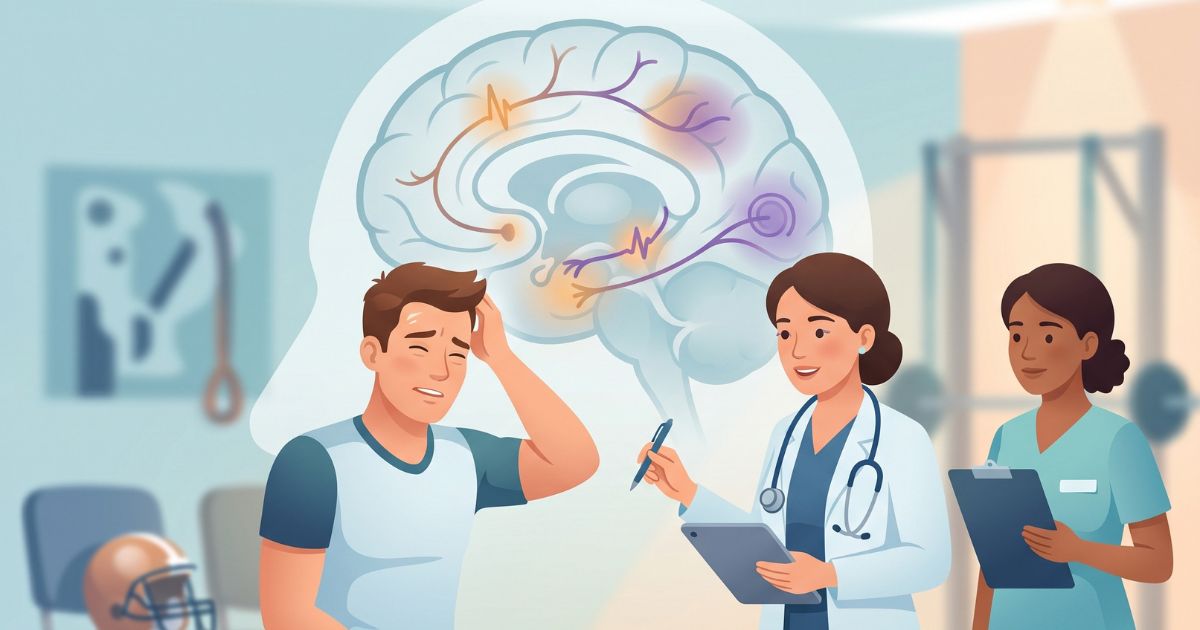
A sports concussion is a mild traumatic brain injury caused by a blow, bump, jolt, or forceful movement that disrupts normal brain function. Although concussions are often described as “mild” because they are not usually life-threatening, they still require careful evaluation and proper management.
Concussions can affect thinking, memory, balance, vision, mood, sleep, and physical comfort. Symptoms may appear immediately after the injury or develop over several hours or days. Because returning to play too soon can increase the risk of another injury and prolong recovery, athletes should be evaluated before returning to sports or high-risk activity.
Early recognition, medical assessment, and a structured recovery plan help protect brain health and support a safe return to school, work, exercise, and athletic participation.
Overview
Concussions are common in contact and high-impact sports, but they can occur in any athletic activity. A concussion may happen after a direct hit to the head, a collision with another player, a fall, or a blow to the body that causes the head and brain to move rapidly.
A concussion does not always involve loss of consciousness. In fact, many athletes remain awake after the injury but may feel confused, dizzy, slowed down, or “not right.” Because symptoms can be subtle, athletes, coaches, parents, and trainers should take any suspected concussion seriously.
Sports concussion care focuses on:
- Recognizing symptoms early
- Removing the athlete from play when concussion is suspected
- Evaluating for red flag symptoms
- Supporting physical and cognitive recovery
- Preventing repeat injury
- Guiding return-to-learn and return-to-play safely
- Managing prolonged symptoms when they occur
A concussion should never be ignored or treated as something an athlete can simply “push through.”
What Is a Concussion?
A concussion is a type of traumatic brain injury that temporarily changes how the brain functions. It can affect the way brain cells communicate, how the brain uses energy, and how the nervous system responds to physical and cognitive activity.
A concussion may cause symptoms involving:
- Thinking and concentration
- Memory
- Balance
- Vision
- Headache
- Sleep
- Mood
- Reaction time
- Sensitivity to light or noise
A person does not need to be knocked out to have a concussion. Any athlete who feels dazed, confused, dizzy, off-balance, or has symptoms after a head or body impact should be evaluated.
Causes and Mechanism of Injury
A concussion occurs when a sudden force causes the brain to move quickly inside the skull. This movement can stretch or disrupt brain cells and temporarily interfere with normal brain signaling.
Concussions may result from:
- Direct hit to the head
- Collision with another player
- Fall to the ground
- Impact with equipment
- Whiplash-type movement
- Blow to the body that transfers force to the head
- Sudden acceleration or deceleration
- Repeated smaller impacts during play
The injury may not always look dramatic from the outside. Even a seemingly mild impact can cause symptoms, especially if the athlete has had prior concussions.
Sports at Risk
Concussions can occur in nearly any sport or recreational activity. Sports with contact, speed, falls, or collisions tend to carry higher risk.
Common sports and scenarios include:
- Football tackles or helmet impacts
- Soccer heading or player collisions
- Basketball falls or elbow impacts
- Hockey contact with players, boards, or ice
- Martial arts and boxing impacts
- Cheerleading falls or stunts
- Cycling crashes
- Skateboarding or skating falls
- Lacrosse or rugby collisions
- Baseball or softball ball impacts
- Gymnastics falls
- Wrestling or grappling injuries
- Accidental head impacts during practice or competition
Protective equipment can reduce certain risks, but no helmet or mouthguard can completely prevent concussion.
Symptoms
Concussion symptoms can vary from person to person. Some athletes have obvious symptoms right away, while others notice changes later. Symptoms may be physical, cognitive, emotional, or sleep-related.
Common symptoms include:
- Headache
- Dizziness
- Balance problems
- Nausea
- Vomiting
- Blurred vision
- Sensitivity to light
- Sensitivity to noise
- Confusion
- Feeling slowed down
- Feeling foggy
- Trouble concentrating
- Memory problems
- Difficulty remembering the injury
- Irritability
- Anxiety
- Sadness
- Mood changes
- Fatigue
- Drowsiness
- Trouble falling asleep
- Sleeping more or less than usual
Some athletes may simply say they “do not feel right.” That should be taken seriously.
Signs Others May Notice
Coaches, teammates, parents, or trainers may observe changes after a concussion. These signs can be important because the athlete may not fully recognize or report symptoms.
Observable signs may include:
- Appearing dazed or stunned
- Confusion about position, score, or assignment
- Moving clumsily
- Slow response to questions
- Forgetting plays or instructions
- Personality or behavior changes
- Loss of balance
- Blank stare
- Trouble following directions
- Repeating questions
- Forgetting events before or after the impact
- Irritability or emotional changes
- Difficulty walking normally
If concussion is suspected, the athlete should be removed from play and evaluated.
Red Flag Symptoms / Emergency Signs
Some symptoms may suggest a more serious brain injury and require immediate medical attention.
Seek emergency care if there is:
- Loss of consciousness
- Repeated vomiting
- Severe or worsening headache
- Seizure
- Slurred speech
- Weakness
- Numbness
- Decreased coordination
- One pupil larger than the other
- Double vision
- Increasing confusion
- Unusual behavior
- Severe agitation
- Inability to wake up
- Increasing drowsiness
- Neck pain with neurological symptoms
- Worsening symptoms over time
These symptoms should not be watched at home without medical guidance.
When to Seek Medical Attention
Evaluation is recommended for any suspected concussion, even if symptoms seem mild. Early assessment helps confirm the diagnosis, check for warning signs, and guide safe recovery.
Medical evaluation is especially important when:
- Symptoms begin after a head or body impact
- The athlete feels confused, dizzy, or foggy
- Headache persists or worsens
- There are balance or vision problems
- Memory is affected
- Symptoms interfere with school, work, or daily function
- The athlete has had prior concussions
- Symptoms last more than a few days
- The athlete wants to return to sports
- Parents, coaches, or trainers noticed abnormal behavior
An athlete should not return to play the same day a concussion is suspected.
Schedule a Neurological Evaluation
If you are experiencing neurological symptoms or require a specialist evaluation, Dr. Chakfe provides expert, comprehensive care tailored to your needs.
Diagnostic Approach
Diagnosis is based on a clinical evaluation. Most concussions do not show up on routine imaging, so the diagnosis depends on symptoms, examination findings, injury history, and recovery pattern.
A concussion evaluation may include:
- Detailed description of the injury
- Symptom checklist
- Neurological examination
- Balance assessment
- Vision and eye movement testing
- Cognitive screening
- Memory and concentration testing
- Review of prior concussions
- Sleep and mood assessment
- Return-to-school or work needs
- Review of red flag symptoms
The provider may ask what happened before, during, and after the injury, including whether there was confusion, memory loss, dizziness, or behavior change.
Tests Used
Testing depends on the severity of symptoms and whether there are concerns for a more serious injury.
Common evaluation tools may include:
Neurological Examination
A neurological examination may assess:
- Strength
- Reflexes
- Sensation
- Coordination
- Balance
- Eye movements
- Speech
- Walking pattern
- Mental status
- Memory and attention
This helps identify signs that may require urgent imaging or specialist evaluation.
Cognitive Testing
Cognitive testing helps evaluate brain functions commonly affected by concussion.
Testing may assess:
- Attention
- Memory
- Processing speed
- Reaction time
- Concentration
- Orientation
- Ability to follow instructions
Some athletes may have baseline testing before the season, which can be useful for comparison after injury.
Balance and Vestibular Testing
Balance and vestibular symptoms are common after concussion. Testing may evaluate how well the athlete controls posture, eye movements, and spatial orientation.
This may include:
- Standing balance tests
- Walking balance assessment
- Eye tracking
- Gaze stability
- Dizziness provocation testing
- Motion sensitivity evaluation
These findings can help guide vestibular rehabilitation when needed.
Imaging
CT or MRI is not required for every concussion. Imaging may be recommended when there is concern for bleeding, skull fracture, severe injury, or worsening neurological symptoms.
Imaging may be considered if there is:
- Severe or worsening headache
- Repeated vomiting
- Loss of consciousness
- Seizure
- Weakness or numbness
- Slurred speech
- Worsening confusion
- Significant trauma
- Abnormal neurological examination
Imaging can help rule out more serious injury, but a normal scan does not always mean symptoms are not real.
Acute Management
Initial management focuses on safety, monitoring, and reducing symptom triggers. The athlete should be removed from play immediately if concussion is suspected.
Early care may include:
- Stopping sports participation
- Resting during the initial recovery period
- Avoiding another head impact
- Monitoring for worsening symptoms
- Limiting activities that significantly worsen symptoms
- Avoiding alcohol or unsafe medications unless approved
- Staying hydrated
- Sleeping as needed
- Following medical instructions
Complete isolation in a dark room for many days is usually not helpful for most patients. After the first brief rest period, gradual return to light daily activity is often recommended as long as symptoms do not significantly worsen.
Return-to-Play Protocol
Return to play should be gradual, stepwise, and medically supervised. The athlete should not return to full sport participation until symptoms have improved and they have been cleared by a qualified healthcare provider.
A typical return-to-play progression may include:
- Back to regular activities
The athlete returns to school or daily routine with symptoms controlled. - Light aerobic activity
Gentle walking or stationary biking without resistance training. - Moderate activity
Increased heart rate with light jogging or moderate stationary cycling. - Heavy, non-contact activity
Running, sprinting, sport-specific drills, and more intense exercise without contact. - Practice with full contact
Full practice only after medical clearance. - Return to competition
Full game play when the athlete remains symptom-free through prior steps.
Each step usually takes at least 24 hours. If symptoms return, the athlete should stop, rest, and return to the previous step under medical guidance.
Return-to-Learn
Cognitive recovery is just as important as physical recovery. School, reading, screens, testing, bright lights, noise, and concentration can worsen symptoms early after concussion.
A return-to-learn plan may include:
- Shortened school days
- Rest breaks
- Reduced homework
- Extra time for assignments
- Postponed tests
- Reduced screen exposure if symptoms worsen
- Quiet environment when needed
- Avoiding bright lights or loud settings
- Gradual increase in reading and computer work
- Communication with teachers, parents, and school staff
Most students can begin returning to school before all symptoms are completely gone, but the plan should be gradual and adjusted based on symptom tolerance.
Treatment Options
Treatment is individualized based on symptoms, age, sport, prior concussion history, and recovery progress. The goal is to reduce symptoms, restore function, and support safe return to activity.
Treatment may include:
- Education and activity guidance
- Headache management
- Sleep support
- Vestibular therapy
- Vision therapy when needed
- Physical therapy
- Neck rehabilitation
- Cognitive accommodations
- Gradual aerobic exercise
- Mood and anxiety support
- Medication review
- Return-to-learn planning
- Return-to-play supervision
A structured recovery plan helps prevent both under-treatment and premature return to activity.
Symptom Management
Different symptoms may require different treatment strategies.
Headache
Post-concussion headaches may be related to migraine, neck strain, sleep disruption, or exertion sensitivity.
Management may include:
- Hydration
- Sleep regulation
- Avoiding overuse of pain medication
- Treating migraine-like symptoms when present
- Neck therapy if cervical strain contributes
- Gradual return to activity
- Trigger tracking
Dizziness and Balance Problems
Dizziness after concussion may come from vestibular dysfunction, vision problems, migraine, neck injury, or balance system disruption.
Management may include:
- Vestibular rehabilitation
- Balance exercises
- Gaze stabilization
- Motion sensitivity training
- Avoiding unsafe activities during active dizziness
- Fall prevention guidance
Sleep Disturbance
Sleep problems are common after concussion and may slow recovery.
Support may include:
- Consistent sleep schedule
- Reduced late-night screen use
- Avoiding caffeine late in the day
- Relaxation routines
- Medical evaluation if insomnia persists
Concentration and Memory Difficulty
Cognitive symptoms often improve gradually but may require temporary accommodations.
Support may include:
- Short study periods
- Breaks during school or work
- Reduced multitasking
- Written reminders
- Extra time for assignments
- Gradual increase in mental workload
Mood and Emotional Symptoms
Some patients experience irritability, anxiety, sadness, or emotional sensitivity after concussion. These symptoms are real and should be addressed as part of recovery.
Support may include:
- Education and reassurance
- Sleep improvement
- Gradual activity
- Stress management
- Counseling or behavioral health support when needed
- Monitoring for prolonged symptoms
Post-Concussion Syndrome
Most concussion symptoms improve within days to weeks. However, some patients experience symptoms that last longer. This is often called post-concussion syndrome or persistent post-concussion symptoms.
Persistent symptoms may include:
- Headache
- Dizziness
- Fatigue
- Brain fog
- Trouble concentrating
- Memory problems
- Sleep disturbance
- Light or noise sensitivity
- Neck pain
- Mood changes
- Exercise intolerance
Risk factors for prolonged recovery may include:
- Prior concussion
- Severe initial symptoms
- Migraine history
- Anxiety or mood disorder
- Sleep problems
- Vestibular symptoms
- Returning to activity too soon
- Lack of proper accommodations
Persistent symptoms require a more detailed and individualized treatment plan.
Prevention Strategies
Not all concussions can be prevented, but risk can be reduced with safer practices and proper awareness.
Prevention strategies include:
- Wearing appropriate protective equipment
- Using proper sport-specific technique
- Following rules designed to reduce dangerous contact
- Avoiding head-first contact when possible
- Reporting symptoms immediately
- Removing athletes from play after suspected concussion
- Following return-to-play guidelines
- Strengthening neck and core muscles
- Ensuring safe practice environments
- Educating athletes, parents, and coaches
- Avoiding same-day return after suspected concussion
Protective gear is important, but it does not make an athlete concussion-proof.
Risks of Returning Too Soon
Returning to play before full recovery can worsen symptoms, prolong recovery, and increase the risk of another concussion. A second injury before the brain has recovered may be more serious.
Risks may include:
- Longer recovery time
- Worsening headaches
- Increased dizziness
- Poor school or work performance
- Higher risk of another concussion
- More severe symptoms with repeat injury
- Reduced athletic performance
- Increased emotional symptoms
- Greater risk of falls or collisions
This is why medical clearance and a gradual return-to-play process are essential.
Long-Term Management
Some athletes need follow-up care after the initial evaluation, especially if symptoms persist, they have had multiple concussions, or they are having difficulty returning to school, work, or sports.
Long-term management may include:
- Follow-up neurological evaluation
- Symptom tracking
- Return-to-play monitoring
- Return-to-learn adjustments
- Vestibular therapy
- Physical therapy
- Headache treatment
- Sleep management
- Cognitive support
- Discussion of risks with repeated concussions
- Sport participation counseling when needed
The goal is not only to return the athlete to play, but to protect long-term brain health.
Why Early Evaluation Matters
Early evaluation helps identify concussion, rule out more serious injury, and guide recovery. It also helps prevent athletes from returning to activity too soon.
Early evaluation can help:
- Confirm the diagnosis
- Identify red flag symptoms
- Reduce risk of repeat injury
- Guide rest and activity levels
- Support safe return to school
- Create a stepwise return-to-play plan
- Treat headaches, dizziness, and sleep problems
- Identify prolonged symptoms early
- Provide reassurance and education
- Protect long-term neurological health
Any suspected concussion should be evaluated, even when symptoms seem mild.
Living With a Sports Concussion
Recovering from a concussion can be frustrating, especially for athletes who want to return quickly. Symptoms may fluctuate from day to day and can worsen with overexertion, poor sleep, stress, screens, or intense physical activity.
Helpful recovery strategies may include:
- Following the medical recovery plan
- Avoiding same-day return to sports
- Getting adequate sleep
- Staying hydrated
- Eating regular meals
- Taking breaks from schoolwork or screens when needed
- Gradually increasing activity
- Reporting symptoms honestly
- Avoiding high-risk activities until cleared
- Keeping follow-up appointments
A safe recovery is more important than rushing back to competition.
Why Choose Us
At Brain & Nerve Center, we provide comprehensive evaluation and management for sports concussion and post-concussion symptoms. Our approach focuses on accurate diagnosis, symptom-based treatment, and safe return to school, work, exercise, and athletic participation.
We use a structured evaluation that may include neurological examination, cognitive screening, balance assessment, vestibular evaluation, symptom tracking, and imaging coordination when red flag symptoms are present.
Treatment plans are individualized based on the patient’s symptoms, sport, age, recovery progress, and risk factors. We help guide return-to-learn, return-to-play, symptom management, and follow-up care for athletes with persistent or complex symptoms.
Our goal is to support recovery, reduce the risk of repeat injury, and help patients return to activity safely and confidently.