
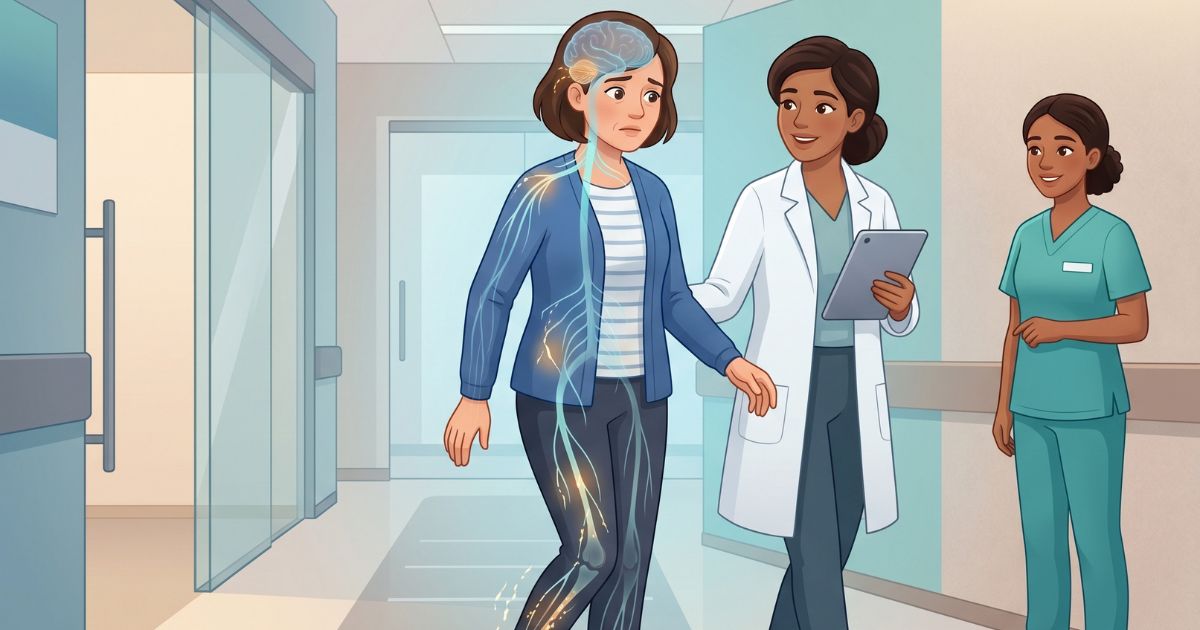
Gait abnormalities refer to changes in the way a person walks. These changes may involve balance, coordination, posture, stride length, walking speed, foot placement, or the ability to start and continue movement. A gait abnormality can develop gradually over time or appear suddenly due to an underlying neurological, muscular, vestibular, orthopedic, or systemic condition.
Walking may seem automatic, but it requires precise communication between the brain, spinal cord, peripheral nerves, muscles, joints, vision, and balance systems. When one or more of these systems is affected, walking can become unsteady, slow, stiff, weak, uneven, or unsafe.
Early evaluation is important because gait abnormalities can increase the risk of falls, injuries, loss of independence, and reduced quality of life. Identifying the underlying cause allows for a more targeted treatment plan focused on improving mobility, safety, and confidence with movement.
Overview
Walking is a complex neurological and physical function. It requires strength, sensation, coordination, balance, attention, and proper communication between multiple body systems. The brain plans movement, the spinal cord transmits signals, the peripheral nerves activate muscles, and the sensory systems provide feedback about body position and the environment.
A gait abnormality may occur when there is a problem with:
- The brain
- The spinal cord
- Peripheral nerves
- Muscles
- Joints
- Inner ear balance system
- Vision
- Sensory feedback
- Coordination pathways
- Medication effects
- Overall strength and endurance
Some gait changes are mild and temporary. Others may be signs of a neurological disorder, progressive disease, nerve damage, stroke, spinal cord problem, or balance disorder. Because many different conditions can affect walking, a detailed evaluation is essential.
What Is a Gait Abnormality?
A gait abnormality is any change from a normal walking pattern. This may include changes in how a person places their feet, shifts weight, balances, turns, starts walking, or maintains a steady pace.
A person with a gait abnormality may walk more slowly, drag one foot, shuffle, sway, limp, stagger, lean to one side, or feel as if their legs are not responding normally. Some people feel unsteady only in certain situations, such as walking in the dark, turning quickly, climbing stairs, or walking on uneven ground.
Gait abnormalities are not a diagnosis by themselves. They are a sign that something may be affecting the nervous system, muscles, joints, balance system, or overall physical function.
Types of Gait Disorders
Gait abnormalities can be grouped into different categories based on the pattern of walking and the suspected underlying cause. Identifying the gait pattern helps guide diagnosis and treatment.
Common categories include:
- Neurologic gait disorders
- Muscular gait abnormalities
- Sensory gait disorders
- Vestibular gait disorders
- Cerebellar gait disorders
- Parkinsonian gait
- Spastic gait
- Steppage gait
- Antalgic gait
- Functional gait disorders
- Age-related or multifactorial gait decline
Some people have more than one contributing factor. For example, an older adult may have peripheral neuropathy, arthritis, muscle weakness, and medication-related dizziness at the same time. A complete evaluation helps identify all possible causes.
Neurologic Gait Disorders
Neurologic gait disorders occur when walking is affected by the brain, spinal cord, or nerves. These disorders may affect strength, coordination, sensation, balance, or movement control.
Neurologic causes may include:
- Stroke
- Parkinson’s disease
- Peripheral neuropathy
- Multiple sclerosis
- Spinal cord compression
- Cerebellar disease
- Normal pressure hydrocephalus
- Brain injury
- Motor neuron disease
- Myelopathy
- Dementia-related gait changes
- Seizure-related or episodic neurological conditions
Neurologic gait disorders may be associated with weakness, stiffness, tremor, numbness, poor coordination, slowed movement, or difficulty initiating steps.
Muscular Gait Abnormalities
Muscular gait abnormalities occur when the muscles do not generate enough strength or endurance to support normal walking. This may result from muscle disease, nerve injury, deconditioning, or pain.
Muscle-related gait problems may cause:
- Difficulty rising from a chair
- Trouble climbing stairs
- Waddling gait
- Fatigue while walking
- Frequent tripping
- Weakness in the hips, thighs, legs, or feet
- Need to use the arms for support when standing
- Reduced walking distance
Muscle weakness can be caused by conditions such as myopathy, muscular dystrophy, inflammatory muscle disease, nerve compression, radiculopathy, or prolonged inactivity.
Sensory Gait Disorders
Sensory gait disorders occur when the brain does not receive accurate information from the feet, legs, or joints. This can make it difficult to know where the body is in space, especially when walking in the dark or on uneven surfaces.
Sensory gait problems may occur with:
- Peripheral neuropathy
- Diabetic neuropathy
- Vitamin B12 deficiency
- Spinal cord disorders
- Nerve injury
- Sensory ataxia
People with sensory gait disorders may look down while walking, take wide steps, stomp their feet, or feel much worse when their eyes are closed or lighting is poor.
Vestibular Gait Disorders
The vestibular system, located in the inner ear, helps the body maintain balance and spatial orientation. When this system is affected, a person may feel dizzy, off-balance, or as if the room is spinning.
Vestibular-related gait symptoms may include:
- Dizziness
- Vertigo
- Unsteadiness
- Swaying while walking
- Trouble turning the head while walking
- Nausea with movement
- Balance problems in busy visual environments
- Feeling pulled to one side
Vestibular gait problems may be caused by inner ear disorders, vestibular neuritis, benign positional vertigo, Ménière’s disease, migraine-related dizziness, or central nervous system conditions.
Functional Gait Disorders
Functional gait disorders are walking problems caused by abnormal nervous system functioning rather than structural damage to the nerves or muscles. These symptoms are real and can significantly affect mobility.
Functional gait disorders may cause unusual or inconsistent walking patterns, sudden leg weakness, knee buckling, dragging, or imbalance. Symptoms may vary depending on attention, stress, fatigue, or environment.
A careful neurological examination can help distinguish functional gait disorders from other neurological conditions. Treatment often involves education, physical therapy, movement retraining, and support for contributing physical or emotional factors.
Causes and Risk Factors
Gait abnormalities can have many causes. Some are neurological, while others are related to muscles, joints, balance, medications, vision, or general health.
Common causes include:
- Stroke
- Parkinson’s disease
- Peripheral neuropathy
- Multiple sclerosis
- Spinal cord disorders
- Lumbar or cervical radiculopathy
- Cerebellar disorders
- Brain injury
- Normal pressure hydrocephalus
- Muscle weakness
- Myopathy
- Arthritis or joint pain
- Inner ear balance disorders
- Vision problems
- Medication side effects
- Low blood pressure or dizziness
- Diabetes
- Vitamin deficiencies
- Aging-related balance decline
- Deconditioning or reduced activity
- Prior falls or fear of falling
Risk factors may include:
- Older age
- History of falls
- Diabetes
- Neurological disease
- Prior stroke
- Back or neck problems
- Numbness in the feet
- Muscle weakness
- Poor vision
- Dizziness or vertigo
- Multiple medications
- Joint pain
- Sedentary lifestyle
- Cognitive decline
Because gait abnormalities are often multifactorial, more than one issue may need to be treated.
Symptoms
Symptoms of a gait abnormality vary depending on the underlying cause. Some people notice a visible change in their walking pattern, while others mainly feel unstable or unsafe.
Common symptoms include:
- Unsteady walking
- Poor balance
- Shuffling steps
- Dragging one foot
- Limping
- Frequent tripping
- Falls or near-falls
- Difficulty turning
- Difficulty starting movement
- Freezing while walking
- Walking slower than usual
- Wider stance
- Swaying from side to side
- Shortened stride
- Stiff or rigid walking
- Foot drop
- Trouble climbing stairs
- Needing support from walls or furniture
- Feeling worse in the dark
- Dizziness or vertigo
- Numbness or tingling in the feet
- Weakness in the legs
- Fatigue while walking
Some symptoms may point toward a specific cause. For example, shuffling and freezing may suggest a movement disorder, while foot slapping or tripping may suggest foot drop or nerve involvement.
When to Seek Medical Attention
Medical evaluation is recommended when walking changes are new, worsening, unexplained, or interfering with daily life. Even mild gait problems should be assessed if they increase fall risk or limit independence.
Seek medical attention if you notice:
- New difficulty walking
- Sudden imbalance
- Frequent falls
- New weakness
- Numbness or tingling in the legs or feet
- Dizziness with walking
- Difficulty starting or stopping movement
- Dragging one foot
- Trouble climbing stairs
- New tremor or stiffness
- Changes in speech, vision, or coordination
- Walking changes after a fall or injury
- Progressive decline in mobility
Urgent evaluation is especially important if gait changes occur suddenly or are associated with signs of stroke, such as facial drooping, arm weakness, speech difficulty, severe dizziness, or sudden confusion.
Schedule a Neurological Evaluation
If you are experiencing neurological symptoms or require a specialist evaluation, Dr. Chakfe provides expert, comprehensive care tailored to your needs.
Associated Neurological Conditions
Gait abnormalities are commonly linked to neurological conditions. In some cases, changes in walking may be one of the first noticeable symptoms of an underlying disorder.
Associated neurological conditions may include:
- Stroke
- Transient ischemic attack
- Parkinson’s disease
- Peripheral neuropathy
- Diabetic neuropathy
- Multiple sclerosis
- Cervical myelopathy
- Lumbar spinal stenosis
- Radiculopathy
- Cerebellar ataxia
- Normal pressure hydrocephalus
- Motor neuron disease
- Brain tumors
- Brain injury
- Dementia-related gait impairment
- Vestibular disorders
- Functional neurological disorder
Because gait changes can be an early clue to neurological disease, a careful examination is important.
Diagnostic Approach
Diagnosis begins with a detailed history and neurological examination. The provider will ask about when the walking problem started, how quickly it progressed, whether falls have occurred, and whether symptoms are constant or intermittent.
Important details may include:
- When symptoms began
- Whether the change was sudden or gradual
- History of falls or near-falls
- Presence of weakness, numbness, dizziness, or pain
- Medication use
- History of stroke, diabetes, neuropathy, or Parkinson’s disease
- Back or neck symptoms
- Vision or hearing problems
- Balance issues
- Cognitive changes
- Home safety concerns
- Use of assistive devices
During the examination, the provider may observe the patient walking, turning, standing from a chair, balancing, and changing direction. The neurological examination may assess strength, reflexes, sensation, coordination, eye movements, posture, muscle tone, and balance.
Tests Used
Testing depends on the suspected cause of the gait abnormality. Not every patient needs every test. The goal is to identify the underlying reason for walking difficulty and guide treatment.
Common tests may include:
Neurological Examination
A neurological examination evaluates how the brain, spinal cord, nerves, and muscles are functioning. This may include assessment of:
- Muscle strength
- Reflexes
- Sensation
- Coordination
- Balance
- Muscle tone
- Eye movements
- Walking pattern
- Posture
- Foot clearance
- Turning ability
The examination often provides important clues about the cause of the gait problem.
MRI or CT Imaging
Imaging may be used to evaluate the brain, spine, or other structures when a neurological cause is suspected.
Imaging may help identify:
- Stroke
- Brain injury
- Tumor
- Normal pressure hydrocephalus
- Multiple sclerosis lesions
- Spinal cord compression
- Disc herniation
- Spinal stenosis
- Structural abnormalities
MRI is often preferred for detailed evaluation of the brain, spinal cord, nerves, and soft tissues.
EMG and Nerve Conduction Studies
Electromyography and nerve conduction studies, often called EMG/NCS, evaluate nerve and muscle function. These tests may be recommended when symptoms suggest neuropathy, radiculopathy, nerve compression, or muscle disease.
EMG/NCS may help evaluate:
- Peripheral neuropathy
- Diabetic neuropathy
- Foot drop
- Nerve compression
- Radiculopathy
- Motor neuron disorders
- Muscle disease
- Nerve injury
These tests can help determine whether weakness or walking difficulty is coming from the nerves, muscles, or nerve roots.
Laboratory Testing
Blood work may be used to check for medical or metabolic causes that can affect walking and balance.
Testing may include evaluation for:
- Diabetes
- Vitamin B12 deficiency
- Thyroid disease
- Inflammation
- Autoimmune disease
- Infection
- Kidney or liver problems
- Electrolyte imbalance
- Muscle enzyme abnormalities
- Medication-related effects
Some causes of gait abnormality are treatable when identified early.
Vestibular and Balance Testing
If dizziness or vertigo is present, vestibular testing may be recommended. This can help determine whether balance symptoms are coming from the inner ear, brain, or another cause.
Vestibular evaluation may include:
- Eye movement testing
- Positional testing
- Balance platform testing
- Hearing evaluation
- Vestibular rehabilitation assessment
This testing can be especially helpful when walking problems are associated with dizziness, spinning sensations, or imbalance.
Treatment Options
Treatment depends on the underlying cause of the gait abnormality. The main goals are to improve safety, reduce fall risk, treat the cause when possible, and improve walking ability.
Treatment may include:
- Physical therapy
- Balance training
- Strengthening exercises
- Gait rehabilitation
- Medication adjustment
- Treatment of neurological disease
- Management of neuropathy
- Vestibular therapy
- Assistive devices
- Orthotics or braces
- Fall prevention planning
- Pain management
- Treatment of vitamin or metabolic deficiencies
- Ongoing neurological follow-up
A personalized treatment plan is important because gait abnormalities can have many different causes.
Physical Therapy and Gait Rehabilitation
Physical therapy is one of the most important parts of treatment for many gait and balance disorders. Therapy can help improve strength, coordination, flexibility, balance, endurance, and confidence with walking.
Gait rehabilitation may include:
- Balance exercises
- Strength training
- Walking practice
- Posture training
- Coordination exercises
- Fall recovery strategies
- Stair training
- Turning practice
- Endurance training
- Dual-task walking exercises
- Stretching and flexibility work
- Functional movement training
Physical therapy can also help patients learn safer movement strategies and reduce fear of falling.
Assistive Devices
Assistive devices may be recommended when additional support is needed for safety. The right device can improve confidence, reduce fall risk, and help patients remain active.
Assistive devices may include:
- Cane
- Walker
- Rollator
- Ankle-foot orthosis
- Foot drop brace
- Custom orthotics
- Walking poles
- Wheelchair for longer distances when needed
Using an assistive device does not mean a patient is giving up independence. In many cases, the correct device helps preserve independence by making movement safer and more reliable.
Fall Prevention Strategies
Fall prevention is a key part of managing gait abnormalities. Falls can lead to injuries, fractures, fear of walking, and reduced activity.
Fall prevention may include:
- Removing loose rugs
- Improving home lighting
- Installing grab bars
- Using handrails on stairs
- Wearing supportive shoes
- Avoiding slippery surfaces
- Reviewing medications that may cause dizziness
- Treating vision problems
- Using assistive devices correctly
- Practicing balance exercises
- Keeping walkways clear
- Using night lights
- Addressing foot numbness or weakness
Patients who have already fallen or feel afraid of falling should be evaluated carefully.
Long-Term Management
Some gait abnormalities improve with treatment, while others require long-term management. Ongoing care focuses on maintaining mobility, preventing falls, and adjusting treatment as symptoms change.
Long-term management may include:
- Regular neurological follow-up
- Continued physical therapy
- Home exercise programs
- Medication adjustments
- Repeat testing when symptoms change
- Monitoring for progression
- Assistive device updates
- Management of chronic neurological conditions
- Fall risk reassessment
- Caregiver education when needed
For progressive conditions such as Parkinson’s disease, neuropathy, or spinal cord disorders, long-term care may help slow functional decline and preserve independence.
Why Early Diagnosis Matters
Early diagnosis is important because some causes of gait abnormality are treatable or manageable when identified promptly. Delayed evaluation can increase the risk of falls, injuries, worsening mobility, and loss of independence.
Early diagnosis can help:
- Identify reversible causes
- Reduce fall risk
- Improve walking safety
- Treat neurological disease earlier
- Prevent complications
- Improve confidence with movement
- Support independence
- Guide therapy and rehabilitation
- Determine whether imaging or nerve testing is needed
A change in walking should not be ignored, especially when it is new, progressive, or associated with other neurological symptoms.
Living With a Gait Abnormality
Living with a gait abnormality can affect daily routines, independence, confidence, and emotional well-being. Patients may begin avoiding stairs, uneven ground, public places, or long walks because of fear of falling.
Supportive care can help patients remain active and safe. This may include therapy, home safety changes, proper footwear, assistive devices, and education about how to move safely.
Helpful strategies may include:
- Staying physically active within safe limits
- Practicing prescribed exercises
- Using assistive devices as recommended
- Avoiding rushing while walking
- Taking extra care when turning
- Keeping the home environment clear
- Reporting new symptoms early
- Following up regularly with the care team
The goal is to improve mobility while helping patients feel safer and more confident.
Why Choose Us
At Brain & Nerve Center, we provide comprehensive evaluation and treatment for gait abnormalities, walking difficulty, and balance disorders. Our approach focuses on identifying the underlying cause of the problem rather than treating the walking change as an isolated symptom.
We use a structured neurological evaluation to assess strength, sensation, reflexes, coordination, balance, posture, and walking pattern. When needed, we may recommend advanced diagnostic testing such as MRI, CT, EMG/NCS, laboratory testing, or vestibular evaluation to better understand the cause of symptoms.
Our treatment plans are individualized and may include physical therapy, gait rehabilitation, fall prevention strategies, assistive device recommendations, medication management, and long-term neurological monitoring.
Our goal is to help patients improve mobility, reduce fall risk, maintain independence, and feel more confident with daily movement.