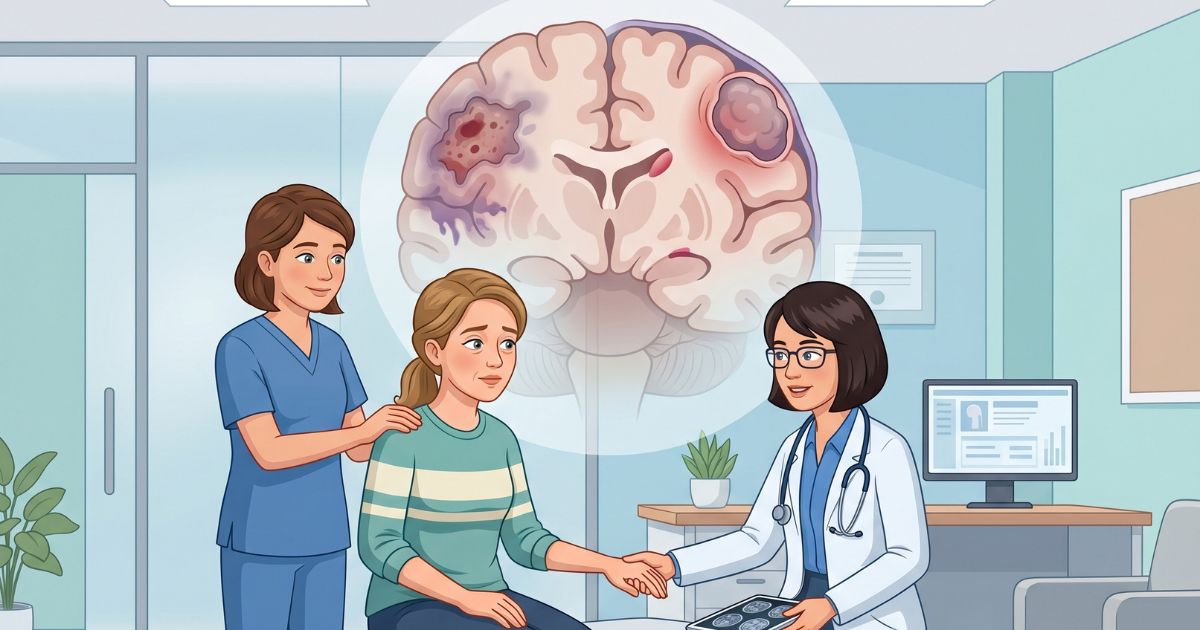
Brain tumors are abnormal growths of cells that develop within the brain or surrounding structures. They can affect neurological function depending on their type, size, location, growth rate, and relationship to nearby brain tissue. Some brain tumors are benign and slow-growing, while others are malignant and more aggressive.
Brain tumors may cause symptoms by irritating brain tissue, increasing pressure inside the skull, affecting specific neurological pathways, or triggering seizures. Because symptoms can vary widely, early evaluation is important when new or progressive neurological changes occur.
A coordinated approach to diagnosis and care is essential. Brain tumor management often involves neurologists, neurosurgeons, neuro-oncologists, radiation oncologists, radiologists, pathologists, rehabilitation specialists, and supportive care teams working together to guide treatment and long-term monitoring.
Overview
Brain tumors may originate in the brain or spread to the brain from cancer elsewhere in the body. Tumors that begin in the brain are called primary brain tumors. Tumors that spread from another part of the body are called metastatic brain tumors.
Primary brain tumors may arise from different types of cells, including glial cells, meninges, nerve sheath cells, pituitary cells, or other tissues within the central nervous system. Their behavior can range from slow-growing and relatively stable to fast-growing and life-threatening.
The impact of a brain tumor depends on several factors, including:
- Tumor type
- Tumor grade
- Tumor size
- Tumor location
- Growth rate
- Degree of swelling around the tumor
- Whether the tumor is causing seizures
- Whether critical brain areas are involved
- Overall health of the patient
- Treatment options available
Some tumors may be discovered after symptoms develop. Others may be found incidentally during imaging for another reason. Regardless of how they are found, brain tumors require careful evaluation to understand their nature and guide next steps.
What Are Brain Tumors?
Brain tumors are masses formed by abnormal cell growth in or near the brain. These growths can disrupt normal brain function in several ways. A tumor may press on nearby tissue, interfere with communication between brain regions, cause swelling, increase pressure inside the skull, or irritate the brain enough to cause seizures.
Brain tumors are commonly described as benign or malignant.
A benign brain tumor is generally slower-growing and less likely to invade surrounding tissue. However, benign does not always mean harmless. Even a slow-growing tumor can cause serious symptoms if it presses on important areas of the brain, optic nerves, brainstem, or spinal cord.
A malignant brain tumor is cancerous and tends to grow more aggressively. Malignant tumors may invade nearby brain tissue and often require more intensive treatment.
Brain tumors are also classified by grade. Tumor grade describes how abnormal the cells look under a microscope and how aggressively the tumor is likely to behave. Molecular testing may also be used to better classify certain tumors and guide treatment planning.
Types of Brain Tumors
There are many different types of brain tumors. Some of the commonly encountered tumors include glioblastoma, astrocytoma, and meningioma.
Common types include:
- Glioblastoma, also called GBM
- Astrocytoma
- Meningioma
- Oligodendroglioma
- Ependymoma
- Pituitary tumors
- Schwannoma
- Metastatic brain tumors
- Primary central nervous system lymphoma
This page focuses on three important categories: GBM, astrocytoma, and meningioma.
Glioblastoma / GBM
Glioblastoma, often called GBM, is an aggressive malignant brain tumor that arises from glial cells. It is considered a high-grade glioma and usually grows quickly. GBM can infiltrate surrounding brain tissue, which makes treatment complex.
Symptoms of GBM may develop over weeks to months and depend on the tumor’s location. Some patients first present with a seizure. Others may develop headaches, weakness, speech problems, vision changes, confusion, or personality changes.
GBM treatment typically requires a coordinated plan that may include surgery, radiation therapy, chemotherapy, tumor treating fields in selected cases, clinical trial consideration, and supportive care. The goal is to remove or reduce as much tumor as safely possible, slow tumor growth, manage symptoms, and preserve quality of life.
Common features of GBM may include:
- Rapid growth
- Malignant behavior
- Infiltration into surrounding brain tissue
- Swelling around the tumor
- Seizure risk
- Neurological symptoms based on location
- Need for multidisciplinary treatment
- Need for long-term imaging follow-up
Because GBM is aggressive, prompt evaluation and treatment planning are important.
Astrocytoma
Astrocytomas are tumors that arise from astrocytes, which are star-shaped glial cells that support nerve cells in the brain and spinal cord. Astrocytomas can vary widely in behavior. Some are lower-grade and slower-growing, while others are higher-grade and more aggressive.
Astrocytomas may be classified based on tumor grade and molecular features. This classification helps determine prognosis and treatment options.
Astrocytomas may be described as:
- Low-grade astrocytoma
- High-grade astrocytoma
- Diffuse astrocytoma
- Anaplastic astrocytoma
- Glioblastoma in certain classification systems
- IDH-mutant or IDH-wildtype depending on molecular features
Symptoms depend on the location of the tumor and may include seizures, headaches, weakness, speech changes, vision problems, or cognitive changes.
Treatment may include observation in selected low-risk cases, surgery, radiation therapy, chemotherapy, targeted treatment when appropriate, and ongoing monitoring. The approach depends on tumor type, grade, molecular profile, symptoms, and patient-specific factors.
Meningioma
Meningiomas are tumors that arise from the meninges, which are the protective layers surrounding the brain and spinal cord. Most meningiomas are benign and slow-growing, but some may be atypical or malignant. Even benign meningiomas can cause symptoms if they become large or press on important structures.
Meningiomas may occur in different locations, including the surface of the brain, skull base, around the optic nerves, near venous sinuses, or along the spinal cord.
Symptoms depend on tumor size and location. Some meningiomas are found incidentally and may not require immediate treatment. Others may require surgery or radiation therapy if they are growing, causing symptoms, or located in a sensitive area.
Meningiomas may cause:
- Headaches
- Seizures
- Vision changes
- Hearing changes
- Weakness
- Numbness
- Balance problems
- Memory or personality changes
- Cranial nerve symptoms depending on location
Treatment may include observation with repeat imaging, surgical removal, radiation therapy, or radiosurgery in selected cases. The safest plan depends on the tumor’s size, growth pattern, location, and impact on neurological function.
Causes and Risk Factors
The exact cause of most brain tumors is not known. Many occur without a clear inherited cause or identifiable trigger. However, certain factors may increase risk.
Possible risk factors include:
- Prior radiation exposure to the head
- Certain inherited genetic syndromes
- Family history of specific tumor syndromes
- Age-related risk factors
- Immune system conditions in selected tumor types
- History of cancer elsewhere in the body for metastatic tumors
Inherited conditions associated with certain brain tumors may include:
- Neurofibromatosis
- Tuberous sclerosis
- Li-Fraumeni syndrome
- Von Hippel-Lindau disease
- Lynch syndrome in selected cases
- Other rare genetic syndromes
Most brain tumors are not caused by anything the patient did. Many patients have no known risk factors.
Symptoms
Brain tumor symptoms vary based on tumor location, size, swelling, growth rate, and whether the tumor affects brain electrical activity. Symptoms may develop gradually or, in some cases, appear suddenly.
Common symptoms may include:
- Persistent or worsening headaches
- New seizures
- Weakness on one side of the body
- Numbness or tingling
- Speech difficulty
- Vision changes
- Hearing changes
- Balance problems
- Dizziness
- Memory problems
- Confusion
- Personality changes
- Difficulty concentrating
- Nausea or vomiting
- Sleepiness or reduced alertness
- Trouble walking
- Coordination problems
Symptoms may be subtle at first. A person may notice changes in work performance, mood, memory, balance, or language before more obvious neurological symptoms appear.
Headaches and Brain Tumors
Headaches are a common concern for patients, but most headaches are not caused by brain tumors. However, certain headache patterns may require evaluation, especially when they are new, progressive, or associated with neurological symptoms.
Headache features that may be concerning include:
- New headache that progressively worsens
- Headache with vomiting
- Headache with seizure
- Headache with weakness or numbness
- Headache with vision changes
- Headache that wakes a person from sleep
- Headache that is different from prior headaches
- Headache with confusion or personality change
- Headache in a patient with known cancer
- Headache with abnormal neurological examination
A neurological evaluation can help determine whether imaging or additional testing is needed.
Seizures and Brain Tumors
Seizures are a common presenting symptom of some brain tumors. A seizure may occur when abnormal electrical activity develops in the brain near or around the tumor.
Seizures may appear as:
- Full-body convulsions
- Staring spells
- Sudden confusion
- Repetitive movements
- Unusual smells, tastes, or sensations
- Sudden speech difficulty
- One-sided jerking
- Temporary weakness after an episode
- Episodes of altered awareness
A new seizure in an adult should be evaluated promptly. Brain imaging and neurological assessment are often needed to identify the cause.
Cognitive, Personality, and Behavioral Changes
Brain tumors can affect thinking, mood, and behavior, especially when they involve frontal, temporal, or deep brain networks. These changes may be mistaken for stress, depression, dementia, medication effects, or normal aging.
Possible changes include:
- Memory problems
- Poor attention
- Difficulty planning
- Reduced judgment
- Personality change
- Irritability
- Apathy
- Confusion
- Difficulty finding words
- Slowed thinking
- Emotional changes
- Trouble completing familiar tasks
Family members may notice these changes before the patient does. New or progressive cognitive or personality changes should be evaluated, especially when accompanied by headache, seizure, weakness, or speech problems.
When to Seek Urgent Medical Attention
Immediate medical evaluation is necessary if symptoms are sudden, severe, or rapidly worsening. Brain tumors can sometimes cause swelling, bleeding, seizures, or increased pressure that requires urgent care.
Seek urgent medical attention if there is:
- New seizure
- Loss of consciousness
- Sudden weakness
- Sudden numbness
- Trouble speaking
- Vision loss
- Severe or worsening headache
- Repeated vomiting
- Increasing confusion
- Severe drowsiness
- New trouble walking
- Sudden balance or coordination problems
- Personality change with reduced awareness
- Symptoms that rapidly worsen over hours or days
Any sudden neurological deficit should be treated as urgent.
Schedule a Neurological Evaluation
If you are experiencing neurological symptoms or require a specialist evaluation, Dr. Chakfe provides expert, comprehensive care tailored to your needs.
Diagnostic Approach
Diagnosis begins with a detailed clinical evaluation. The provider will review symptoms, medical history, neurological changes, timing of symptom progression, medications, cancer history, and family history. A neurological examination helps identify which brain pathways may be affected.
A brain tumor evaluation may include:
- Detailed symptom history
- Neurological examination
- Cognitive assessment
- Seizure history
- Medication review
- Review of prior cancers or radiation exposure
- Brain imaging
- Referral to neurosurgery or neuro-oncology when needed
- Tissue diagnosis when appropriate
- Pathology and molecular testing
- Long-term imaging follow-up
The goal is to identify the tumor type, location, and likely behavior so that treatment can be planned safely.
Tests Used
Testing depends on symptoms, imaging findings, and suspected tumor type.
Common tests may include:
Neurological Examination
A neurological examination evaluates how the brain and nervous system are functioning.
This may include assessment of:
- Strength
- Reflexes
- Sensation
- Coordination
- Balance
- Walking
- Vision
- Eye movements
- Speech and language
- Memory
- Attention
- Cranial nerve function
- Mental status
Findings from the examination help correlate symptoms with tumor location.
MRI of the Brain
MRI is one of the most important tests for evaluating a suspected brain tumor. It provides detailed images of the brain and can help identify tumor size, location, swelling, and involvement of surrounding structures.
MRI may help evaluate:
- Tumor location
- Tumor size
- Degree of swelling
- Relationship to critical brain areas
- Enhancement patterns
- Possible tumor type
- Surgical planning needs
- Treatment response over time
- Recurrence monitoring
MRI with contrast is commonly used when a brain tumor is suspected, unless contrast is not appropriate for the patient.
CT Scan
A CT scan may be used in urgent settings or when MRI is not immediately available. CT can help detect bleeding, large masses, swelling, hydrocephalus, or skull-related abnormalities.
CT may be used when there is:
- New seizure
- Sudden neurological symptoms
- Head injury
- Concern for bleeding
- Severe headache
- Emergency evaluation needs
- MRI contraindication
MRI is usually more detailed for brain tumor characterization, but CT can be very useful in acute care.
Biopsy and Pathology
A biopsy involves obtaining a sample of tumor tissue for analysis. In many cases, tissue diagnosis is needed to determine the exact tumor type and grade.
Pathology may evaluate:
- Tumor cell type
- Tumor grade
- Growth pattern
- Markers of aggressiveness
- Molecular features
- Genetic markers relevant to treatment
A biopsy may be performed as a separate procedure or during surgery to remove the tumor.
Molecular Testing
Modern brain tumor diagnosis often includes molecular testing. These results can help classify tumors more accurately and guide treatment decisions.
Molecular testing may evaluate markers such as:
- IDH mutation status
- MGMT promoter methylation
- 1p/19q codeletion
- TERT promoter mutation
- ATRX status
- p53 findings
- Other tumor-specific markers
These tests help the care team better understand tumor behavior and treatment options.
Additional Testing
Additional testing may be recommended depending on the case.
This may include:
- Blood tests for overall health before treatment
- EEG if seizures are suspected
- Functional MRI for surgical planning
- MR spectroscopy or perfusion imaging in selected cases
- PET imaging in selected cases
- Body imaging if metastatic disease is suspected
- Vision or hearing testing based on tumor location
- Neuropsychological testing for cognitive symptoms
Testing is tailored to the patient’s symptoms and treatment plan.
Treatment Options
Treatment depends on the tumor type, grade, size, location, symptoms, molecular profile, and overall health of the patient. Some tumors require urgent treatment. Others may be monitored carefully before intervention.
Treatment options may include:
- Observation with repeat imaging
- Surgery
- Biopsy
- Radiation therapy
- Radiosurgery
- Chemotherapy
- Targeted therapy in selected cases
- Tumor treating fields in selected cases
- Anti-seizure medication
- Steroids to reduce swelling
- Rehabilitation therapy
- Supportive and palliative care
- Clinical trial consideration
The treatment plan should be individualized and coordinated by a multidisciplinary team.
Surgical Treatment Options
Surgery is often an important part of brain tumor care. The goal may be to remove as much tumor as safely possible, obtain tissue for diagnosis, reduce pressure, improve symptoms, and support further treatment planning.
Surgical goals may include:
- Maximal safe tumor removal
- Biopsy for diagnosis
- Relief of pressure or swelling
- Reduction of seizure burden
- Preservation of neurological function
- Preparation for radiation or chemotherapy
- Improvement in symptoms caused by mass effect
The ability to remove a tumor depends on its location. Tumors near speech, movement, vision, memory, or brainstem pathways require careful planning to reduce risk.
Surgical planning may involve:
- Advanced MRI
- Functional mapping
- Intraoperative monitoring
- Awake surgery in selected cases
- Collaboration between neurology and neurosurgery
- Postoperative rehabilitation planning
Not every tumor can be fully removed safely. In some cases, partial removal or biopsy is the safest approach.
Radiation Therapy
Radiation therapy uses targeted energy to damage tumor cells and slow or stop growth. It may be used after surgery, when surgery is not possible, or for tumors that are growing or recurring.
Radiation therapy may be used for:
- Glioblastoma
- High-grade astrocytoma
- Selected low-grade gliomas
- Recurrent tumors
- Meningiomas that cannot be fully removed
- Atypical or malignant meningiomas
- Tumors in difficult surgical locations
Radiation planning is carefully designed to target the tumor while limiting exposure to surrounding brain tissue.
Chemotherapy and Medical Therapy
Chemotherapy may be used for certain brain tumors, especially malignant gliomas such as GBM and selected astrocytomas. The type of medication depends on tumor diagnosis, molecular markers, and overall treatment plan.
Medical therapy may include:
- Chemotherapy
- Targeted therapy in selected tumors
- Steroids to reduce swelling
- Anti-seizure medications
- Medications for nausea or treatment side effects
- Clinical trial therapies when appropriate
- Tumor treating fields in selected cases
Treatment decisions are guided by neuro-oncology and the broader care team.
Symptom Management and Supportive Care
Symptom management is an essential part of brain tumor care. Supportive treatment can improve comfort, safety, and daily function.
Supportive care may include:
- Anti-seizure medication
- Steroids to reduce swelling
- Headache management
- Nausea management
- Sleep support
- Mood and anxiety support
- Cognitive support
- Pain management
- Nutrition support
- Family and caregiver education
- Safety planning
- Palliative care support when appropriate
Supportive care does not mean stopping treatment. It is often used alongside active tumor treatment to improve quality of life.
Multidisciplinary Treatment Approach
Brain tumor care often requires collaboration between multiple specialists. A coordinated team helps ensure that diagnosis, treatment, rehabilitation, and long-term monitoring are aligned.
The care team may include:
- Neurologist
- Neurosurgeon
- Neuro-oncologist
- Radiation oncologist
- Medical oncologist
- Neuroradiologist
- Neuropathologist
- Rehabilitation physician
- Physical therapist
- Occupational therapist
- Speech-language pathologist
- Neuropsychologist
- Primary care provider
- Palliative care specialist
- Social worker or care coordinator
This team-based approach helps address both the tumor and the patient’s overall neurological function.
Rehabilitation and Recovery
Brain tumors and their treatments can affect strength, speech, balance, cognition, endurance, and daily independence. Rehabilitation can help patients recover function, adapt to changes, and maintain quality of life.
Rehabilitation may include:
- Physical therapy
- Occupational therapy
- Speech therapy
- Cognitive rehabilitation
- Balance training
- Gait training
- Swallowing therapy when needed
- Vision therapy in selected cases
- Home safety planning
- Energy conservation strategies
- Return-to-work or school support
Rehabilitation may begin before surgery, during treatment, or after treatment depending on the patient’s needs.
Long-Term Management and Monitoring
Long-term follow-up is essential for brain tumor care. Even after treatment, patients need monitoring for tumor recurrence, treatment effects, seizure control, cognitive changes, and functional status.
Long-term monitoring may include:
- Regular neurological examinations
- Repeat MRI scans
- Seizure management
- Medication adjustment
- Monitoring for treatment side effects
- Cognitive assessment
- Rehabilitation follow-up
- Review of headaches or new symptoms
- Coordination with oncology and neurosurgery
- Support for patients and caregivers
Follow-up schedules depend on tumor type, grade, treatment history, and current symptoms.
Quality of Life and Support
A brain tumor diagnosis can affect every part of life, including physical function, mood, memory, work, family roles, independence, and future planning. Supportive care and clear communication are important throughout the process.
Patients and families may need help with:
- Understanding the diagnosis
- Navigating referrals
- Managing seizures
- Coping with uncertainty
- Planning treatment
- Managing fatigue
- Addressing memory or thinking changes
- Handling mood changes
- Coordinating rehabilitation
- Planning safe daily activities
- Understanding follow-up imaging
- Accessing community and caregiver support
Compassionate, coordinated care can make the treatment journey easier to navigate.
Why Early Diagnosis Matters
Early diagnosis allows for timely treatment planning and may help preserve neurological function. Some tumors require urgent intervention, while others need careful monitoring. In both cases, knowing the diagnosis helps patients and families make informed decisions.
Early diagnosis can help:
- Identify the tumor type
- Determine whether surgery is needed
- Treat seizures early
- Reduce swelling and pressure
- Preserve neurological function
- Improve safety
- Coordinate specialist care
- Guide rehabilitation
- Monitor for progression
- Support quality of life
New or worsening neurological symptoms should be evaluated promptly.
Living With a Brain Tumor
Living with a brain tumor can be emotionally and physically challenging. Symptoms and treatment effects may change over time, and patients may need ongoing support from both medical professionals and family members.
Helpful strategies may include:
- Keeping follow-up appointments
- Reporting new symptoms promptly
- Taking seizure medication as prescribed
- Tracking headaches, seizures, or neurological changes
- Following rehabilitation recommendations
- Getting adequate rest
- Asking for help with daily tasks when needed
- Avoiding unsafe activities if seizures or weakness are present
- Maintaining communication with the care team
- Including family or caregivers in treatment discussions
The goal is to support the patient’s neurological function, safety, comfort, and quality of life at every stage of care.
Why Choose Us
At Brain & Nerve Center, we provide comprehensive neurological evaluation and coordination of care for patients with brain tumors, including glioblastoma, astrocytoma, meningioma, and other brain tumor types. Our approach focuses on accurate diagnosis, careful symptom assessment, and timely coordination with specialized treatment teams.
We evaluate symptoms such as seizures, headaches, weakness, numbness, speech changes, vision problems, memory concerns, balance difficulty, and personality or cognitive changes. When needed, we coordinate advanced imaging, EEG testing for seizure evaluation, medication management, and referral to appropriate specialists.
We collaborate with top neurosurgeons and neuro-oncologists in Orlando to help guide patients through diagnosis, treatment planning, and long-term monitoring. Our team supports patients before, during, and after treatment with neurological follow-up, symptom management, seizure care, rehabilitation guidance, and coordinated communication with the broader care team.
Our goal is to help each patient receive timely, personalized, and comprehensive care while preserving neurological function and supporting quality of life.