Epilepsy is a neurological condition characterized by recurrent seizures, which are episodes of abnormal electrical activity in the brain. Seizures can affect awareness, movement, sensation, behavior, memory, and consciousness. Because seizures can look very different from one person to another, accurate diagnosis is essential for understanding the type of seizure, identifying possible causes, and creating the right treatment plan.
At Brain & Nerve Center, we provide comprehensive evaluation and management for patients experiencing seizures, seizure-like episodes, unexplained spells, lapses in awareness, abnormal movements, or suspected epilepsy. Our goal is to determine whether the events are epileptic seizures, identify the type and underlying cause when possible, and develop an individualized plan focused on seizure control, safety, and long-term neurological health.
A first-time seizure should always be medically evaluated. While one seizure does not always mean a person has epilepsy, recurrent unprovoked seizures often require long-term management. Early diagnosis helps reduce risk, guide treatment, and give patients and families a clearer understanding of what to do if another episode occurs.
Overview
Seizures occur when there is a sudden burst of abnormal electrical activity in the brain. This electrical disturbance can temporarily disrupt normal brain function. Depending on where the abnormal activity begins and how it spreads, a seizure may cause convulsions, staring, confusion, unusual sensations, repetitive movements, loss of awareness, or temporary changes in behavior.
Epilepsy is usually diagnosed when a person has a tendency to experience recurrent unprovoked seizures. “Unprovoked” means the seizure is not directly caused by a temporary factor such as very low blood sugar, severe electrolyte imbalance, drug or alcohol withdrawal, or a high fever in young children.
Seizures can affect people of all ages. Some begin in childhood, while others develop later in life due to stroke, brain injury, infection, tumors, genetic factors, or other neurological conditions. In many cases, the exact cause may not be found.
Because not all seizure-like events are epilepsy, careful evaluation is important. Fainting, migraine, sleep disorders, movement disorders, panic attacks, heart rhythm problems, and other conditions can sometimes resemble seizures. A structured diagnostic approach helps guide the correct diagnosis and treatment.
What Is Epilepsy?
Epilepsy is a chronic neurological disorder in which the brain has an increased tendency to produce seizures. It is not a single disease with one cause. Instead, epilepsy includes many seizure types and epilepsy syndromes, each with different patterns, triggers, risks, and treatment needs.
Some people with epilepsy have seizures that are easy to recognize, such as tonic-clonic seizures with loss of consciousness and body shaking. Others may have subtle episodes, such as brief staring spells, moments of confusion, unusual sensations, repetitive hand movements, or brief lapses in awareness.
Epilepsy may be caused by a known brain condition, such as a prior stroke or traumatic brain injury. It may also be related to genetic factors, developmental brain differences, infections, inflammation, or structural abnormalities. Sometimes no clear cause is identified even after testing.
The goal of epilepsy care is to control seizures as much as possible, reduce safety risks, manage treatment side effects, and support the patient’s quality of life. Many patients achieve good seizure control with appropriate diagnosis and treatment.
What Are Seizures?
A seizure is a temporary episode of abnormal electrical activity in the brain. The symptoms depend on which area of the brain is involved and whether the abnormal activity remains in one area or spreads more widely.
Seizures may affect:
- Awareness or consciousness
- Muscle movement or tone
- Sensation, such as vision, smell, taste, hearing, or touch
- Speech or understanding
- Memory or behavior
- Emotions or perception
- Autonomic functions, such as heart rate, nausea, sweating, or flushing
Some seizures are very brief and may last only seconds. Others may last longer and require emergency care. After a seizure, a person may feel tired, confused, sore, emotional, or have a headache. This recovery period is often called the postictal phase.
Understanding what happens before, during, and after an event is one of the most important parts of seizure evaluation. Witness descriptions, videos of episodes when safely available, and event timing can all help the neurologist determine the most likely seizure type.
Common Seizure Types
Seizures are often grouped based on where they begin in the brain and how they affect awareness and movement. Identifying the seizure type is important because treatment decisions depend on the type of seizure and the patient’s overall profile.
Common seizure types include:
- Focal seizures, which begin in one area of the brain
- Generalized seizures, which involve both sides of the brain from the start
- Absence seizures, which cause brief lapses in awareness
- Tonic-clonic seizures, which may cause loss of consciousness, stiffening, and jerking movements
- Focal impaired awareness seizures, which may cause confusion, staring, or repetitive movements
- Myoclonic seizures, which cause brief shock-like jerks of a muscle or group of muscles
- Atonic seizures, which cause sudden loss of muscle tone
Focal seizures may or may not affect awareness. A person may remain aware but experience unusual sensations, emotions, or movements. In other cases, awareness becomes impaired, and the person may stare, respond poorly, or perform automatic movements such as lip smacking, picking at clothing, or repeated hand motions.
Generalized seizures affect broader brain networks and may involve loss of awareness from the beginning. Tonic-clonic seizures are the type most people associate with epilepsy, but they are only one form of seizure.
Causes and Triggers
Seizures may be caused by an underlying neurological condition, a temporary medical problem, or a combination of risk factors. In some patients, the cause remains unknown.
Possible causes may include:
- Prior brain injury or trauma
- Stroke
- Brain tumors or structural abnormalities
- Brain infections or inflammation
- Genetic epilepsy syndromes
- Developmental brain differences
- Certain metabolic or electrolyte problems
- Neurodegenerative conditions
- Scarring or injury in brain tissue
Some factors may trigger seizures in people who are already seizure-prone. Triggers do not always cause epilepsy by themselves, but they may increase the chance of a seizure in someone with an underlying tendency.
Common triggers may include:
- Sleep deprivation
- Missed anti-seizure medication doses
- Stress
- Illness or fever
- Alcohol or substance withdrawal
- Flashing lights in photosensitive epilepsy
- Hormonal changes in some patients
- Certain medications or medication interactions
Not every person with epilepsy has identifiable triggers. Keeping a seizure diary may help patients recognize patterns and support treatment decisions.
Symptoms
Seizure symptoms vary widely depending on the seizure type and the area of the brain involved. Some symptoms are dramatic and easy to identify, while others are subtle and may be mistaken for daydreaming, fainting, anxiety, migraine, or confusion.
Common symptoms may include:
- Sudden loss of awareness or consciousness
- Staring spells
- Uncontrolled jerking movements
- Muscle stiffening
- Repetitive movements such as lip smacking or hand motions
- Sudden falls
- Brief confusion or memory gaps
- Sensory changes, such as unusual smells, sounds, tastes, or visual symptoms
- Sudden fear, déjà vu, or unusual emotional sensations
- Temporary confusion after an episode
- Fatigue, headache, or soreness after a seizure
Some patients experience an aura before a seizure. An aura may feel like a warning sign, such as a strange smell, rising sensation in the stomach, sudden fear, visual change, or déjà vu. Medically, an aura can be a focal seizure itself.
Because seizures can affect safety, even brief episodes should be discussed with a healthcare provider when they are recurrent, unexplained, or associated with altered awareness.
When to Seek Medical Attention
Medical evaluation is recommended after any first-time seizure or after recurrent episodes of altered awareness, abnormal movements, unexplained confusion, or unusual sensory events. Even if the episode was brief, evaluation can help determine whether testing or treatment is needed.
You should schedule a neurological evaluation if you experience:
- A first-time seizure
- Recurrent staring spells or lapses in awareness
- Episodes of confusion or memory loss
- Uncontrolled jerking or stiffening movements
- Unexplained falls
- Repeated unusual sensations or auras
- Seizures during sleep
- Events witnessed by others that suggest seizure activity
- Symptoms that interfere with driving, work, school, or safety
Emergency medical care is needed if a seizure lasts longer than 5 minutes, if repeated seizures occur without full recovery between them, if breathing is difficult afterward, if the seizure happens in water, if there is a serious injury, or if the person is pregnant, diabetic, or has another high-risk medical condition.
Schedule an Epilepsy and Seizure Evaluation
A first-time seizure, recurrent episodes of altered awareness, unexplained staring spells, abnormal movements, or seizure-like events should be evaluated by a neurological specialist. A careful evaluation can help identify the cause and guide the right treatment plan.
Contact Brain & Nerve Center to schedule an evaluation for epilepsy, seizures, seizure-like episodes, or unexplained neurological events.
If a seizure lasts more than 5 minutes, if repeated seizures occur without recovery between them, or if breathing is difficult after a seizure, call 911 immediately.
Seizure Safety and First Aid
Knowing how to respond during a seizure can help prevent injury and reduce panic. The goal is to keep the person safe until the seizure ends.
During a convulsive seizure:
- Stay calm and time the seizure.
- Ease the person to the floor if they are falling.
- Turn them gently onto one side when possible.
- Move hard or sharp objects away.
- Place something soft and flat under the head.
- Loosen tight clothing around the neck.
- Do not restrain the person.
- Do not put anything in the person’s mouth.
- Stay with them until they are awake and oriented.
After the seizure, the person may be confused, tired, emotional, or unaware of what happened. Speak calmly and help them stay safe while they recover.
Call 911 if the seizure lasts more than 5 minutes, another seizure begins before recovery, the person has trouble breathing, the seizure occurs in water, an injury occurs, or the person does not return to their usual state after the event.
Diagnostic Approach
Diagnosis begins with a detailed history of the event. The neurologist will ask what happened before, during, and after the episode, how long it lasted, whether awareness was affected, whether there were movements, whether there was confusion afterward, and whether there were possible triggers.
Because patients may not remember the event clearly, information from witnesses can be extremely helpful. A video of the episode may also help when it can be captured safely without delaying care.
A neurological examination may evaluate strength, sensation, reflexes, coordination, vision, speech, gait, cognition, and signs of other neurological conditions. The examination helps identify whether there may be an underlying brain, nerve, or systemic condition contributing to seizures.
A structured diagnostic approach helps answer several important questions:
- Was the event likely an epileptic seizure?
- What type of seizure occurred?
- Is there an underlying cause?
- Is the patient at risk for future seizures?
- What treatment or safety precautions are needed?
This careful approach helps distinguish epilepsy from other conditions that may mimic seizures, such as fainting, migraine, heart rhythm problems, sleep disorders, movement disorders, panic attacks, or metabolic problems.
Tests Used
Testing is selected based on the patient’s symptoms, history, examination findings, age, and risk factors. Common tests may include EEG, brain imaging, and laboratory evaluation.
Common tests include:
- Routine EEG to assess brain electrical activity
- Ambulatory EEG for longer-term monitoring
- Video EEG monitoring in selected cases
- MRI of the brain to evaluate structural causes
- CT scan in emergency or acute settings
- Blood tests to check metabolic or medication-related factors
- Additional cardiac testing when fainting or heart rhythm concerns are possible
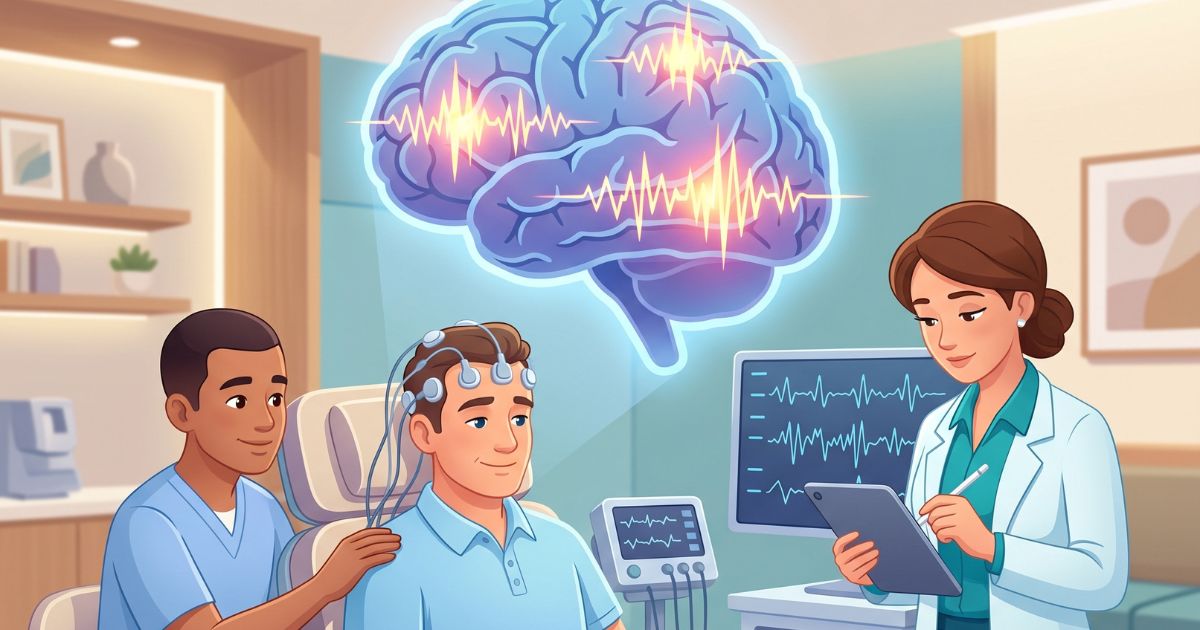
EEG can detect abnormal electrical patterns that support a diagnosis of epilepsy. A normal EEG does not always rule out epilepsy, so results must be interpreted with the clinical history.
MRI can help identify structural causes such as scarring, tumors, prior stroke, malformations, or other brain changes that may contribute to seizures. Blood tests may help identify reversible causes or contributing factors, such as electrolyte abnormalities, infection markers, medication levels, or metabolic problems.
Treatment Options
Treatment focuses on controlling seizures, reducing seizure frequency, improving safety, and supporting quality of life. The best treatment plan depends on seizure type, cause, age, medical history, lifestyle, medication tolerance, and patient goals.
The main goals of treatment are to:
- Reduce or prevent seizures
- Minimize medication side effects
- Improve safety and independence
- Identify and avoid triggers when possible
- Treat underlying causes when found
- Support work, school, driving, and daily life planning
- Monitor long-term neurological health
Some patients may need medication after a first seizure if the risk of recurrence is high. Others may be monitored depending on test results and clinical risk. Patients with confirmed epilepsy often need long-term treatment and follow-up.
Anti-Seizure Medications
Anti-seizure medications are the primary treatment for many people with epilepsy. These medications help reduce abnormal electrical activity in the brain and lower the chance of seizures.
Medication selection depends on the seizure type, EEG findings, imaging results, age, other medical conditions, potential side effects, pregnancy considerations, medication interactions, and patient preferences.
Many patients achieve good seizure control with the right medication plan. However, medication management may require adjustments over time. The dose may need to be changed, side effects may need to be addressed, or a different medication may be recommended if seizures continue.
Patients should take anti-seizure medications exactly as prescribed. Missing doses can increase the risk of breakthrough seizures. Patients should not stop seizure medication suddenly unless directed by a healthcare provider, because abrupt changes may increase seizure risk.
Advanced Therapies
Some patients continue to have seizures despite appropriate medication treatment. When seizures are difficult to control, additional therapies may be considered.
Advanced treatment options may include:
- Vagus nerve stimulation, also called VNS
- Responsive neurostimulation in selected cases
- Deep brain stimulation in selected cases
- Epilepsy surgery evaluation
- Specialized dietary therapy, such as ketogenic diet in selected patients
- Referral to an epilepsy specialist or epilepsy center when appropriate
Epilepsy surgery may be considered when seizures arise from a specific area of the brain that can be safely treated. Neurostimulation therapies may help reduce seizure frequency in patients who are not candidates for surgery or whose seizures remain difficult to control.
These options require careful evaluation, often including advanced imaging, prolonged EEG monitoring, and specialist review.
Lifestyle and Seizure Management
Lifestyle habits can play an important role in seizure control. While lifestyle changes do not replace medical treatment, they can reduce seizure risk and support overall health.
Helpful strategies may include:
- Maintaining regular sleep patterns
- Taking medications consistently
- Avoiding missed doses
- Managing stress
- Avoiding known triggers when possible
- Limiting alcohol when advised by a clinician
- Staying hydrated and eating regularly
- Treating illness or fever promptly
- Keeping a seizure diary
- Wearing medical identification if recommended
Patients should also discuss safety precautions with their provider. This may include guidance around driving, swimming, bathing, heights, operating machinery, cooking, and workplace safety. Driving laws and restrictions vary by state and depend on seizure control, so patients should follow medical and legal guidance.
Long-Term Management
Epilepsy often requires ongoing care and monitoring. Treatment plans may need adjustment based on seizure control, medication side effects, lifestyle changes, pregnancy planning, new medical conditions, or changes in seizure pattern.
Long-term management may include regular neurology visits, medication monitoring, EEG or imaging review when appropriate, seizure diary review, trigger management, and safety planning.
Patients should contact their provider if seizures change, become more frequent, last longer, occur during new situations, or happen despite medication adherence. New symptoms may require reassessment.
The goal of long-term care is not only seizure control, but also quality of life. This includes supporting sleep, mood, memory, work, school, independence, and patient confidence.
Why Early Diagnosis Matters
Early diagnosis allows patients to begin the right treatment and safety planning as soon as possible. It also helps identify underlying causes that may need specific care.
Early diagnosis can help:
- Determine whether events are epileptic seizures
- Identify the seizure type
- Detect possible structural or medical causes
- Begin anti-seizure medication when appropriate
- Reduce risk of injury from future seizures
- Provide seizure first aid education for families
- Support driving, work, school, and lifestyle planning
- Improve long-term seizure control and quality of life
When seizures are recognized and treated early, patients have a better chance of reducing risk and managing the condition effectively.
Why Choose Brain & Nerve Center
Brain & Nerve Center provides a comprehensive and structured approach to diagnosing and managing epilepsy and seizure disorders. We focus on understanding each patient’s events in detail, identifying seizure type, and determining whether there may be an underlying neurological cause.
Our evaluation may include detailed history, neurological examination, EEG testing, brain imaging review, laboratory testing, and long-term monitoring when needed. We also help patients and families understand seizure safety, medication options, trigger management, and when to seek emergency care.
Patients choose Brain & Nerve Center for:
- Evaluation after a first-time seizure
- Diagnosis and management of recurrent seizures
- EEG testing and interpretation
- MRI-based diagnostic support when appropriate
- Anti-seizure medication management
- Guidance for seizure safety and lifestyle planning
- Long-term monitoring for seizure control and neurological health
Our goal is to optimize seizure control, improve safety, reduce risk, and support long-term quality of life through individualized neurological care.