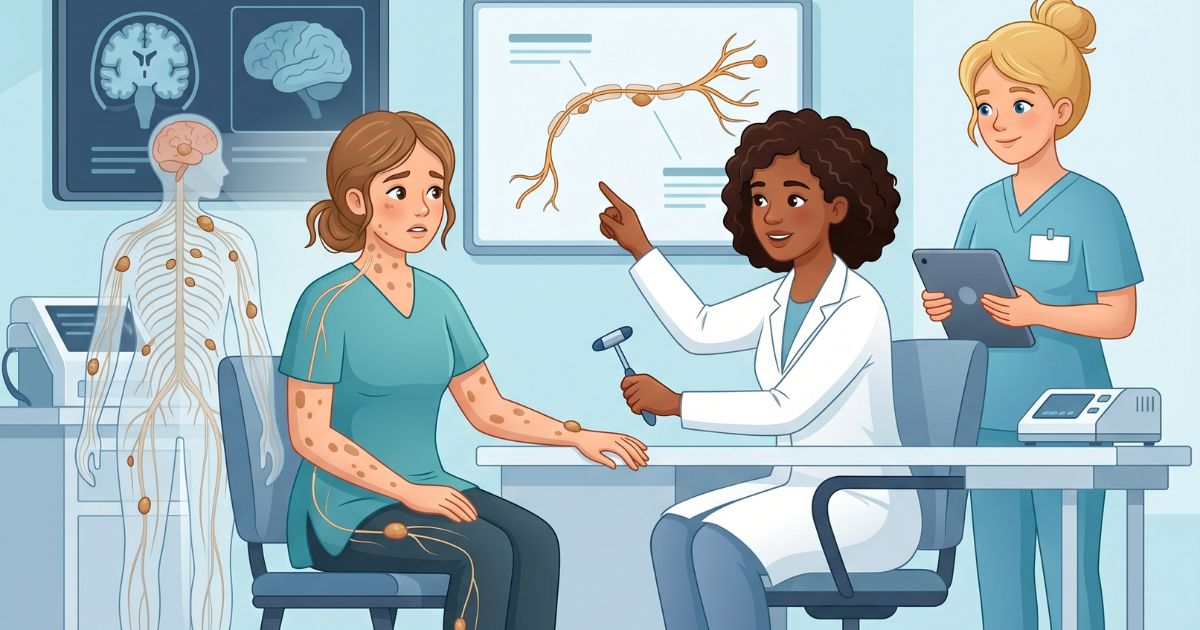
Neurofibromatosis is a group of genetic conditions that cause tumors to develop along nerves in the brain, spinal cord, and throughout the body. These tumors are often benign, but they can still cause symptoms depending on their size, location, growth pattern, and effect on nearby nerves or other structures.
Neurofibromatosis can affect the skin, nervous system, eyes, hearing, bones, blood vessels, learning, and overall function. Symptoms may begin in childhood, adolescence, or adulthood depending on the type. Some people have mild symptoms, while others develop more complex neurological or medical complications that require long-term monitoring.
Because neurofibromatosis can change over time, ongoing care is important. Early diagnosis and regular follow-up can help detect complications, monitor tumor growth, manage symptoms, and coordinate care with the appropriate specialists.
Overview
Neurofibromatosis is not a single disorder. It includes related genetic conditions that affect nerve tissue and tumor growth. These conditions vary in severity, age of onset, tumor type, and the parts of the body most commonly involved.
The main types include:
- Neurofibromatosis type 1, also called NF1
- NF2-related schwannomatosis, historically called neurofibromatosis type 2 or NF2
- Schwannomatosis, including several genetic subtypes
Although these conditions share some similarities, they are distinct disorders. NF1 is most often associated with café-au-lait spots, skin freckling, neurofibromas, optic pathway tumors, learning concerns, and skeletal findings. NF2-related schwannomatosis is more strongly associated with vestibular schwannomas, hearing loss, tinnitus, balance problems, meningiomas, and other nervous system tumors. Schwannomatosis is commonly associated with multiple schwannomas and chronic pain.
A structured evaluation helps determine the type of neurofibromatosis and the best long-term monitoring plan.
What Is Neurofibromatosis?
Neurofibromatosis is a genetic disorder that affects the way certain cells grow, especially cells related to nerves. When genes that normally help regulate cell growth do not function properly, nerve-related cells may grow abnormally and form tumors.
These tumors can occur in:
- Peripheral nerves
- Cranial nerves
- Spinal nerves
- Brain
- Spinal cord
- Skin
- Deep soft tissues
- Protective layers around the brain and spinal cord
Many tumors associated with neurofibromatosis are benign. However, benign tumors can still cause problems if they press on nerves, affect vision or hearing, cause pain, interfere with movement, or grow near important structures. In some cases, certain tumors may become malignant, which is why monitoring is important.
Neurofibromatosis can affect each person differently, even within the same family.
Types of Neurofibromatosis
There are three major clinical categories of neurofibromatosis-related disorders. Each has different features, genes, symptoms, and monitoring needs.
The main types include:
- Neurofibromatosis type 1
- NF2-related schwannomatosis
- Schwannomatosis
Accurate classification is important because the risks, symptoms, imaging needs, and follow-up plans differ.
Neurofibromatosis Type 1 / NF1
Neurofibromatosis type 1 is the most common form of neurofibromatosis. It often becomes noticeable in childhood because of skin findings, especially café-au-lait spots and freckling in areas such as the armpits or groin.
NF1 can affect multiple body systems, including the skin, nerves, eyes, bones, blood vessels, and learning development.
Common features of NF1 may include:
- Café-au-lait spots
- Freckling in the armpits or groin
- Cutaneous neurofibromas
- Plexiform neurofibromas
- Lisch nodules in the eyes
- Optic pathway gliomas
- Learning difficulties
- Attention or behavior concerns
- Scoliosis
- Bone abnormalities
- High blood pressure
- Headaches or seizures in some cases
- Pain or neurological symptoms from nerve tumors
Many people with NF1 live active lives, but symptoms can change over time. Some features may become more noticeable during childhood, puberty, pregnancy, or adulthood.
NF2-Related Schwannomatosis / Formerly NF2
NF2-related schwannomatosis was historically called neurofibromatosis type 2. It is a genetic tumor predisposition condition most strongly associated with schwannomas, especially vestibular schwannomas involving the hearing and balance nerves.
NF2-related schwannomatosis often affects hearing and balance. Symptoms may begin in adolescence or early adulthood, although some cases appear earlier or later.
Common features may include:
- Hearing loss
- Ringing in the ears, also called tinnitus
- Balance problems
- Dizziness or unsteadiness
- Vestibular schwannomas
- Schwannomas on other cranial or peripheral nerves
- Meningiomas
- Spinal tumors
- Cataracts or other eye findings
- Facial weakness in some cases
- Numbness, tingling, or weakness from nerve involvement
Because hearing and balance symptoms may develop gradually, early recognition and monitoring are important.
Schwannomatosis
Schwannomatosis is a group of related conditions characterized by the development of multiple schwannomas. Schwannomas are usually benign tumors that arise from Schwann cells, which help insulate nerves.
The most common symptom of schwannomatosis is pain. Pain may occur near a tumor or in a broader region affected by nerve irritation. Some people have only a few tumors, while others develop multiple tumors throughout the body.
Schwannomatosis may be associated with changes in genes such as NF2, SMARCB1, or LZTR1, although not every case has an identifiable genetic change.
Symptoms may include:
- Chronic pain
- Localized nerve pain
- Numbness or tingling
- Weakness
- Muscle loss in affected areas
- Palpable masses
- Headache if tumors involve the head or spine
- Balance or hearing symptoms in selected cases
- Functional limitations due to pain or nerve compression
Management often focuses on pain control, tumor monitoring, neurological function, and surgical decision-making when tumors cause significant symptoms.
Causes and Genetic Background
Neurofibromatosis is caused by changes in genes that help regulate cell growth. When these genes do not work properly, certain nerve-related cells may grow in an uncontrolled way and form tumors.
Different types are associated with different genes:
- NF1 is caused by changes in the NF1 gene
- NF2-related schwannomatosis is associated with changes in the NF2 gene
- Some schwannomatosis cases are associated with SMARCB1 or LZTR1 gene changes
- Some cases may involve mosaic genetic changes
- Some cases may not have an identifiable genetic cause with current testing
Genetic testing can help confirm the diagnosis, guide family counseling, and clarify the specific type of neurofibromatosis. However, diagnosis may also be based on clinical criteria, especially when characteristic findings are present.
Inheritance Pattern and Family Risk
Many neurofibromatosis-related conditions can be inherited in an autosomal dominant pattern. This means that a person with a disease-causing genetic change may have a 50% chance of passing it to each child.
However, not all cases are inherited. Some occur because of a new genetic change that happens for the first time in the affected person. This is called a de novo mutation. Mosaic forms can also occur when the genetic change is present in some cells but not all cells of the body.
Important family-risk points include:
- A parent with NF1 may pass the condition to a child
- A child may develop NF1 even without a family history
- NF2-related schwannomatosis may be inherited or occur spontaneously
- Mosaic forms may have milder or more localized findings
- Genetic counseling can help families understand inheritance and testing options
- Severity can vary widely, even among family members with the same condition
A genetic counselor or specialist can help explain testing, family planning, and screening recommendations.
Early Symptoms
Symptoms may begin at different ages depending on the type of neurofibromatosis.
Common early signs may include:
- Café-au-lait skin spots
- Freckling in the armpits or groin
- Small skin bumps or soft tumors
- Enlarging or painful nerve-related masses
- Vision changes
- Hearing changes
- Ringing in the ears
- Balance problems
- Headaches
- Learning or attention concerns
- Unexplained pain
- Numbness or tingling
- Weakness
- Scoliosis or bone changes
In NF1, skin findings often appear in childhood. In NF2-related schwannomatosis, hearing and balance symptoms may be early clues. In schwannomatosis, pain may be the first major symptom.
Skin, Nerve, and Tumor Manifestations
Neurofibromatosis commonly affects the skin and nerves. Skin findings may be visible, while deeper nerve tumors may not be obvious without imaging.
Skin and nerve manifestations may include:
- Café-au-lait macules
- Freckling in skin folds
- Cutaneous neurofibromas
- Subcutaneous neurofibromas
- Plexiform neurofibromas
- Schwannomas
- Painful nerve tumors
- Enlarging masses
- Tenderness over a nerve
- Numbness or tingling
- Weakness from nerve compression
Neurofibromas and schwannomas are not the same type of tumor. Neurofibromas are more characteristic of NF1, while schwannomas are more typical of NF2-related schwannomatosis and schwannomatosis.
Plexiform neurofibromas can involve larger nerves and may grow into surrounding tissues. These require careful monitoring because they can cause pain, disfigurement, functional problems, or, rarely, malignant transformation.
Neurological Involvement
Neurofibromatosis can affect the central and peripheral nervous systems. Neurological symptoms depend on which nerves or brain structures are involved.
Neurological symptoms may include:
- Headaches
- Seizures
- Numbness
- Tingling
- Weakness
- Pain along a nerve
- Balance problems
- Trouble walking
- Back or neck pain
- Spinal cord compression symptoms
- Facial weakness
- Cranial nerve symptoms
- Cognitive or learning difficulties
- Attention problems
Neurological evaluation is important when symptoms are new, progressive, painful, or associated with functional decline.
Vision and Hearing Involvement
Vision and hearing can be affected in certain types of neurofibromatosis.
In NF1, optic pathway gliomas can affect the nerves involved in vision, especially in children. Not all optic pathway gliomas cause symptoms, but monitoring is important.
Vision symptoms may include:
- Blurred vision
- Decreased vision
- Eye bulging
- Abnormal eye movements
- New vision loss
- Headache with visual changes
In NF2-related schwannomatosis, vestibular schwannomas can affect hearing and balance.
Hearing and balance symptoms may include:
- Hearing loss in one or both ears
- Ringing in the ears
- Difficulty hearing on the phone
- Dizziness
- Unsteadiness
- Balance problems in the dark
- Facial numbness or weakness in some cases
Prompt evaluation is recommended for new vision or hearing changes.
Learning, Developmental, and Cognitive Concerns
NF1 can be associated with learning difficulties, attention problems, developmental delays, and behavioral concerns. These issues can affect school performance, social confidence, and daily functioning.
Possible concerns may include:
- Difficulty with reading
- Trouble with math
- Attention problems
- Executive function challenges
- Speech or language delays
- Motor coordination difficulties
- Social difficulties
- Anxiety or low confidence
- Academic underperformance
- Need for educational support
Early recognition allows children and families to access appropriate interventions, school accommodations, therapy, and developmental support.
When to Seek Medical Attention
Evaluation is recommended when neurofibromatosis is suspected or when known neurofibromatosis symptoms change.
Seek medical evaluation if there is:
- Multiple café-au-lait spots
- Freckling in the armpits or groin
- Multiple skin tumors or nerve-related bumps
- A known family history of neurofibromatosis
- New or worsening pain
- Enlarging tumor or mass
- Numbness or tingling
- Weakness
- Vision changes
- Hearing loss
- Ringing in the ears
- Balance problems
- Seizures
- Headaches with neurological symptoms
- Learning or developmental concerns
- Back pain with weakness or bladder symptoms
Urgent evaluation is needed if there is sudden weakness, sudden vision loss, rapidly worsening neurological symptoms, severe headache with confusion, or signs of spinal cord compression.
Schedule a Neurological Evaluation
If you are experiencing neurological symptoms or require a specialist evaluation, Dr. Chakfe provides expert, comprehensive care tailored to your needs.
Diagnostic Approach
Diagnosis is based on clinical findings, family history, genetic testing when appropriate, and imaging when needed. Because neurofibromatosis can affect multiple systems, the evaluation is often broad and individualized.
A structured diagnostic approach may include:
- Detailed personal and family history
- Full skin examination
- Neurological examination
- Vision assessment
- Hearing and balance review
- Developmental or cognitive screening
- Review of pain symptoms
- Assessment of tumors or masses
- Genetic testing when appropriate
- MRI imaging when internal tumors are suspected
- Referral to specialists as needed
The goal is to identify the specific type of neurofibromatosis, determine the extent of involvement, and create a monitoring plan.
Tests Used
Testing varies depending on the suspected type of neurofibromatosis and the symptoms present.
Common tests may include:
Clinical Examination
A clinical examination looks for characteristic features such as skin findings, nerve tumors, eye findings, neurological deficits, skeletal changes, and signs of tumor-related complications.
The examination may include:
- Skin evaluation
- Neurological examination
- Cranial nerve testing
- Strength and sensation testing
- Reflex testing
- Balance and gait evaluation
- Vision screening
- Hearing symptom review
- Spine and bone assessment
Clinical findings can be enough to diagnose some patients, especially in NF1.
Genetic Testing
Genetic testing may help confirm the diagnosis and identify the specific gene involved. It can be especially helpful when symptoms are subtle, when there is no family history, or when distinguishing between related conditions.
Genetic testing may evaluate:
- NF1
- NF2
- SMARCB1
- LZTR1
- Other genes based on the clinical picture
A genetic counselor may help explain results, inheritance, family risk, and testing options for relatives.
MRI Imaging
MRI may be used to evaluate tumors in the brain, spine, cranial nerves, peripheral nerves, or deeper tissues. Imaging is selected based on symptoms and the suspected type of neurofibromatosis.
MRI may help evaluate:
- Optic pathway gliomas
- Vestibular schwannomas
- Meningiomas
- Spinal tumors
- Plexiform neurofibromas
- Deep nerve tumors
- Brain or spinal cord involvement
- Tumor growth over time
MRI is often part of long-term surveillance for patients at risk of internal tumors.
Eye Examination
An ophthalmology evaluation may be recommended, especially for children with NF1 or patients with vision symptoms.
Eye evaluation may assess:
- Visual acuity
- Optic nerve function
- Lisch nodules
- Optic pathway involvement
- Eye movement abnormalities
- Cataracts in NF2-related schwannomatosis
- Other eye findings related to neurofibromatosis
Hearing Testing
Hearing testing is important when NF2-related schwannomatosis is suspected or when there are hearing or balance symptoms.
Testing may include:
- Audiology evaluation
- Hearing threshold testing
- Speech discrimination testing
- Balance assessment
- MRI of the internal auditory canals when appropriate
Hearing changes should be evaluated early because they may progress gradually.
Treatment Options
There is currently no single cure for neurofibromatosis. Treatment focuses on monitoring, managing symptoms, treating complications, and addressing tumors that cause pain, growth, neurological problems, or functional impairment.
Treatment may include:
- Regular surveillance
- Pain management
- Surgery for symptomatic tumors
- Medication for tumor-related symptoms
- Targeted therapy in selected NF1 tumor cases
- Treatment of seizures when present
- Hearing support
- Vision monitoring
- Physical therapy
- Occupational therapy
- Learning and developmental support
- Psychological support
- Multidisciplinary specialty care
The treatment plan depends on the type of neurofibromatosis and the patient’s specific symptoms.
Symptom Management
Symptom management is an important part of care. Many patients require treatment for pain, neurological symptoms, learning concerns, or functional limitations.
Management may include:
- Pain medication
- Referral to pain management specialists
- Physical therapy
- Occupational therapy
- Seizure treatment
- Headache management
- Treatment of neuropathic pain
- School accommodations
- Speech or developmental therapy
- Hearing aids or hearing support
- Vision care
- Psychological support
- Sleep and fatigue management
Pain should be taken seriously, especially in schwannomatosis, where pain can be the main symptom.
Surgical and Procedural Options
Surgery may be considered when a tumor causes symptoms, grows rapidly, compresses important structures, or affects function. The decision depends on the tumor’s location, size, growth rate, and surgical risk.
Surgery may be used for:
- Painful tumors
- Tumors causing weakness
- Tumors compressing the spinal cord
- Tumors affecting vision or hearing
- Disfiguring or uncomfortable skin tumors
- Suspicious or rapidly growing tumors
- Tumors causing functional impairment
Surgery must be planned carefully because tumors may involve important nerves. In some cases, removal can improve symptoms. In other cases, surgery may carry risk of nerve damage, so careful specialist evaluation is needed.
Multidisciplinary Care Approach
Neurofibromatosis can affect many parts of the body, so care often requires a team approach.
Specialists involved may include:
- Neurology
- Neurosurgery
- Dermatology
- Ophthalmology
- Audiology
- Neuro-oncology
- Genetics
- Orthopedics
- Pain management
- Physical therapy
- Occupational therapy
- Speech therapy
- Psychology or behavioral health
- Primary care
- Oncology when malignancy is suspected
Coordinated care helps ensure that symptoms are monitored, complications are detected early, and treatment decisions are individualized.
Long-Term Monitoring and Surveillance
Long-term monitoring is essential because neurofibromatosis can change over time. Tumors may grow, new symptoms may develop, or complications may appear later in life.
Surveillance may include:
- Regular neurological examinations
- Skin examinations
- Vision testing
- Hearing testing
- Blood pressure monitoring
- Developmental and learning assessments
- MRI imaging when indicated
- Tumor growth monitoring
- Pain assessment
- Spine and skeletal evaluation
- Screening for complications based on age and NF type
- Review of new or changing symptoms
The frequency of monitoring depends on the type of neurofibromatosis, age, symptoms, tumor burden, and prior findings.
Complications and Associated Conditions
Most tumors in neurofibromatosis are benign, but complications can occur depending on tumor type and location.
Possible complications include:
- Chronic pain
- Vision loss
- Hearing loss
- Balance problems
- Weakness or numbness
- Spinal cord compression
- Seizures
- Learning difficulties
- Attention or behavioral concerns
- Scoliosis
- Bone abnormalities
- High blood pressure
- Tumor growth affecting vital structures
- Malignant peripheral nerve sheath tumor in selected NF1 cases
- Functional limitations
- Emotional stress or anxiety related to the condition
Early recognition and monitoring can help reduce the impact of complications.
Why Early Diagnosis Matters
Early diagnosis allows patients and families to understand the condition, begin appropriate monitoring, and detect complications before they become more serious.
Early diagnosis can help:
- Identify the correct type of neurofibromatosis
- Guide genetic counseling
- Monitor vision and hearing
- Detect tumor growth early
- Evaluate pain and neurological symptoms
- Support learning and development
- Prevent complications when possible
- Coordinate specialist care
- Create a long-term surveillance plan
- Improve quality of life
Because symptoms may appear gradually, ongoing follow-up is often just as important as the initial diagnosis.
Living With Neurofibromatosis
Living with neurofibromatosis can be different for every patient. Some people have mild skin findings and few complications, while others require ongoing care for pain, tumors, learning concerns, vision changes, hearing loss, or neurological symptoms.
Helpful long-term strategies may include:
- Keeping regular follow-up appointments
- Reporting new or changing symptoms
- Monitoring vision and hearing
- Tracking painful or enlarging tumors
- Seeking support for learning or attention concerns
- Staying active within safe limits
- Following physical therapy recommendations
- Asking about genetic counseling
- Including family members in care discussions
- Maintaining communication between specialists
The goal is to help patients maintain function, independence, comfort, and quality of life.
Why Choose Us
At Brain & Nerve Center, we provide comprehensive evaluation and long-term management for patients with neurofibromatosis and related nerve tumor disorders. Our approach focuses on accurate diagnosis, neurological assessment, symptom management, and coordinated monitoring over time.
We evaluate symptoms such as nerve pain, numbness, tingling, weakness, headaches, seizures, balance problems, vision changes, hearing concerns, cognitive symptoms, and tumor-related neurological complications. When needed, we coordinate advanced imaging, genetic testing, specialist referrals, and long-term surveillance planning.
Because neurofibromatosis can affect multiple systems, we take a multidisciplinary approach and work closely with specialists such as neurosurgery, dermatology, ophthalmology, audiology, genetics, oncology, pain management, and rehabilitation professionals.
Our goal is to provide personalized care that supports early detection, symptom control, tumor monitoring, neurological function, and long-term quality of life.