
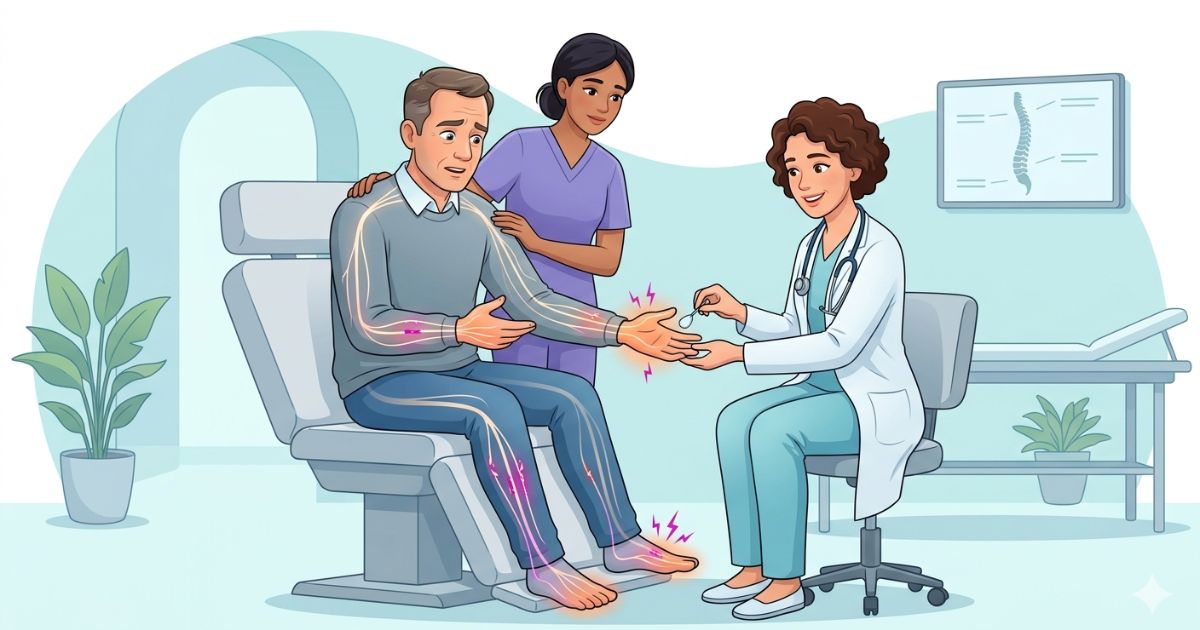
Most people experience tingling or numbness at some point in their lives, like when your leg “falls asleep” after sitting too long. In many cases, this is harmless and temporary. But when these sensations become frequent, persistent, or unexplained, they may signal something more serious: nerve damage.
Understanding when these symptoms are normal and when they require medical attention is important for preventing long-term complications.
What Is Nerve Damage?
Peripheral neuropathy refers to damage or dysfunction of the peripheral nerves—the network of nerves outside the brain and spinal cord. These nerves are responsible for sending signals between the central nervous system and the rest of the body.
When they are damaged, communication between the brain and body becomes disrupted, leading to abnormal sensations such as tingling, burning, numbness, or weakness.
Common Sensations Linked to Nerve Issues
Nerve-related symptoms can vary depending on which nerves are affected, but the most common include:
Tingling (“Pins and Needles”)
Often described as a prickling sensation, tingling can start in the hands or feet and gradually spread.
Burning Sensation
Some people experience a burning or “electric” feeling, especially in the feet or lower legs.
Numbness
Loss of sensation in certain areas can make it difficult to feel temperature, touch, or pain.
Weakness
Muscle weakness or difficulty gripping objects can occur when motor nerves are involved.
When These Symptoms Are Harmless
Not all tingling or numbness is a sign of nerve disease. Temporary symptoms can occur due to:
- Sitting or lying in one position for too long
- Pressure on a nerve (e.g., crossing legs)
- Cold exposure
- Anxiety or hyperventilation
In these cases, symptoms usually resolve quickly once circulation or posture changes.
When Symptoms May Indicate Nerve Damage
Persistent or worsening symptoms should not be ignored. Warning signs include:
- Tingling or numbness that lasts days or weeks
- Symptoms that gradually spread from feet to legs or hands
- Burning pain, especially at night
- Loss of balance or coordination
- Muscle weakness or wasting
- Reduced sensitivity to temperature or touch
These patterns often suggest an underlying nerve disorder rather than temporary irritation.
What Causes Nerve Damage?
There are many possible causes of peripheral nerve damage, including diabetes, vitamin deficiencies, infections, autoimmune disorders, alcohol misuse, exposure to toxins or certain medications, physical injury or nerve compression. In some cases, the cause remains unclear even after testing.
How Doctors Diagnose Nerve Problems
If nerve damage is suspected, a neurological evaluation is usually required.
- Detailed medical history and symptom review
- Physical and neurological examination
- Blood tests to check for vitamin deficiencies or metabolic issues
- Nerve conduction studies
- Electromyography (EMG) testing
Electromyography (EMG) is often used to assess how well nerves and muscles are functioning. It helps determine whether symptoms are caused by nerve damage, muscle disorders, or other neurological conditions.
Can Nerve Damage Be Treated?
Treatment depends on the underlying cause. In many cases, managing the root issue can slow progression or improve symptoms.
Common treatment approaches include:
- Managing blood sugar in diabetes-related cases
- Vitamin supplementation (especially B12)
- Pain management medications
- Physical therapy to improve strength and balance
- Lifestyle changes such as reducing alcohol intake
In some cases, nerve damage can improve over time, but in others, the goal is to prevent further progression and manage symptoms effectively.
Living With Nerve-Related Symptoms
Chronic nerve symptoms can affect quality of life, especially when they interfere with sleep, walking, or daily tasks. Early diagnosis is important because untreated nerve damage can become permanent.
Patients often benefit from a combination of medical treatment, lifestyle adjustments, and ongoing monitoring.
Keeping track of symptom patterns, such as when they worsen or improve, can also help doctors fine-tune treatment strategies.
When to See a Doctor
You should seek medical attention if you experience:
- Persistent tingling, burning, or numbness
- Symptoms that are worsening over time
- Weakness or difficulty using hands or feet
- Balance issues or frequent stumbling
- Pain that interferes with sleep or daily life
Early evaluation can help identify the cause before permanent nerve damage occurs.
Final Thoughts
Tingling, burning, or numbness may seem minor at first, but when these symptoms persist, they can signal underlying nerve dysfunction. Recognizing the difference between temporary discomfort and neurological warning signs is key.
If symptoms are ongoing or unexplained, a neurological assessment can help identify the cause and guide treatment, often improving outcomes significantly when addressed early.