Conditions
Expert Evaluation Beyond the Most Common Diagnoses
Beyond the most common neurological diagnoses, we evaluate and manage a broad range of conditions affecting the brain, nerves, balance, and movement. Whatever the cause of your symptoms, our goal is the same - clear answers, accurate diagnosis, and a personalized plan of care.
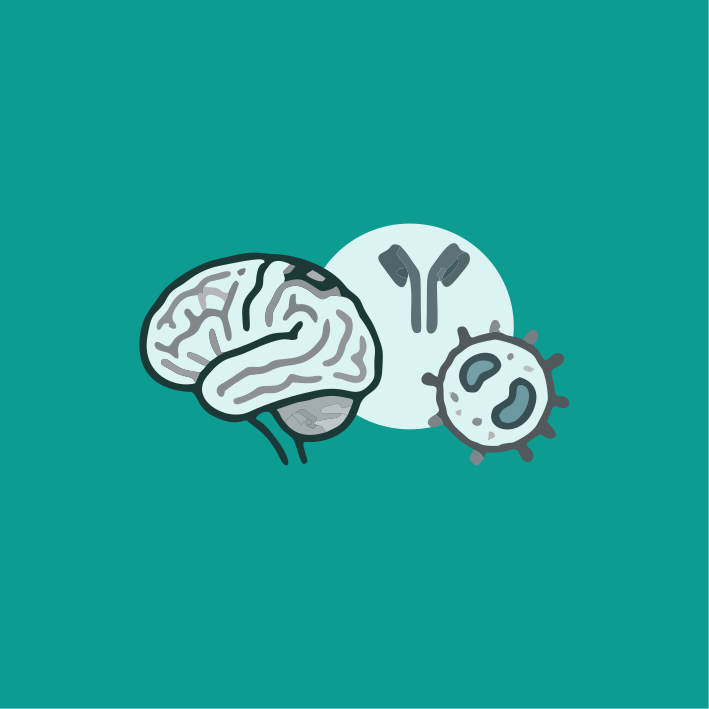
Autoimmune encephalopathy
An immune-mediated condition that causes inflammation of the brain, leading to cognitive, psychiatric, and neurological symptoms.
Multiple sclerosis (MS)
A chronic autoimmune disease that damages the central nervous system, affecting movement, sensation, vision, and cognition.
Epilepsy and seizure disorders
Neurological conditions characterized by recurrent seizures caused by abnormal electrical activity in the brain.
Gait abnormalities
Changes in walking patterns that may result from neurological, muscular, vestibular, or balance-related conditions.
Normal pressure hydrocephalus (NPH)
A treatable neurological condition involving excess fluid in the brain that can cause walking difficulties, memory problems, and urinary symptoms.
Dizziness and vertigo
Conditions that create sensations of imbalance, lightheadedness, or spinning, often related to neurological or vestibular disorders.

Syncope (fainting)
A temporary loss of consciousness caused by reduced blood flow to the brain, requiring evaluation to determine the underlying cause.
Sports-related concussion
A mild traumatic brain injury caused by a blow or jolt to the head that temporarily affects brain function.
Brain tumors (GBM, astrocytoma, meningioma)
Abnormal growths within the brain that may cause neurological symptoms depending on their type, size, and location.
Neurofibromatosis
A genetic disorder that causes tumors to develop along nerves and can affect the skin, brain, spinal cord, and peripheral nervous system.