Neuropathy, damage to the nerves outside the brain and spinal cord, has long been a challenging condition to diagnose and manage. Symptoms like tingling, burning, numbness, and weakness can develop gradually and vary widely between individuals. Today, however, advances in technology and medical research are transforming how clinicians detect and treat nerve disorders.
These innovations are making diagnosis more precise, treatment more personalized, and outcomes more hopeful for patients living with Peripheral neuropathy.
A Shift Toward Earlier and More Accurate Diagnosis
One of the most important developments in neuropathy care is the ability to detect nerve damage earlier than ever before. Traditionally, diagnosis relied heavily on clinical symptoms and basic nerve testing. While these methods are still important, newer tools are improving both speed and accuracy.
High-resolution nerve imaging, including advanced ultrasound and MRI techniques, allows doctors to visualize nerve structure in greater detail. These imaging methods can help identify inflammation, compression, or structural abnormalities that may not have been visible in the past.
In addition, skin biopsy testing has become a valuable tool for diagnosing small fiber neuropathy, a type of nerve damage that often goes undetected with standard tests. By analyzing tiny nerve fibers in the skin, clinicians can confirm damage even when other results appear normal.
Advances in Nerve Function Testing
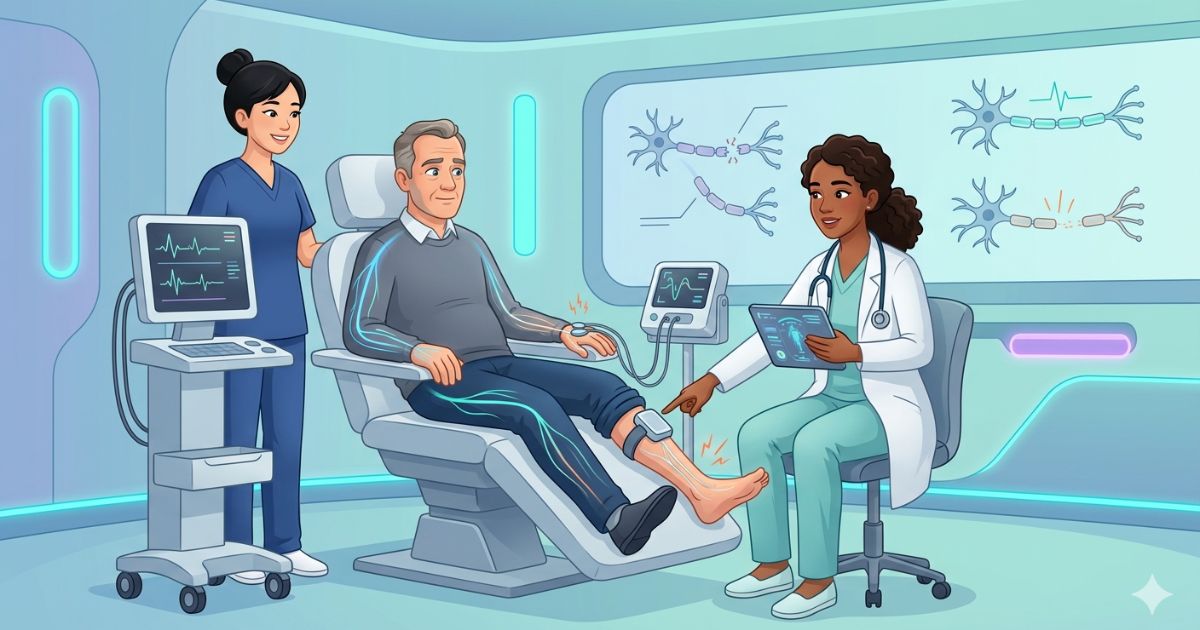
Diagnostic testing has also evolved significantly. Nerve conduction study and Electromyography (EMG) remain key tools, but newer techniques are enhancing their effectiveness.
Modern nerve testing equipment provides more detailed data about how signals travel through nerves, helping distinguish between different types of neuropathy. This level of precision is important because treatment strategies often depend on the specific pattern and cause of nerve damage.
Quantitative sensory testing is another innovation that evaluates how nerves respond to temperature and vibration. This helps detect subtle sensory abnormalities, especially in early stages.
Identifying the Root Cause: A More Personalized Approach
Neuropathy is not a single disease but a result of many possible underlying conditions, including diabetes, autoimmune disorders, infections, and nutritional deficiencies. Innovations in laboratory testing and diagnostics now allow for more targeted identification of these causes.
Genetic testing, for example, is becoming increasingly useful in identifying inherited neuropathies. Meanwhile, improved blood testing can detect metabolic or immune-related contributors more accurately.
This shift toward identifying the root cause is crucial. Instead of treating symptoms alone, clinicians can now tailor treatments to the underlying condition, leading to better long-term outcomes.
New and Emerging Treatment Options
While managing neuropathy has traditionally focused on symptom relief, newer treatments aim to slow progression and, in some cases, support nerve repair.
Medications continue to play a role in managing nerve pain, but there is growing interest in therapies that target nerve regeneration. Research into neuroprotective agents and regenerative medicine is ongoing, with the goal of restoring damaged nerve function rather than simply managing discomfort.
In addition, neuromodulation therapies, such as spinal cord stimulation, are being used in certain cases to alter pain signaling pathways. These approaches can be particularly helpful for patients with chronic, treatment-resistant neuropathic pain.
The Role of Lifestyle and Integrated Care
Innovations in care are not limited to technology. There is increasing recognition of the role lifestyle plays in managing neuropathy.
For example, tighter blood sugar control in diabetic patients can significantly slow nerve damage progression. Nutritional support, physical therapy, and exercise programs are also being integrated into treatment plans to improve mobility, strength, and overall nerve health.
Digital health tools, including wearable devices and mobile apps, are beginning to help patients track symptoms, monitor progress, and stay engaged with their care plans. This ongoing monitoring allows for more responsive and adaptive treatment strategies.
Challenges That Still Remain
Despite these advancements, neuropathy remains complex. Not all causes are easily identified, and not all patients respond the same way to treatment. In some cases, nerve damage may be irreversible, especially if diagnosis is delayed.
Access to advanced diagnostic tools and specialized care can also vary depending on location and healthcare resources.
However, continued research and innovation are steadily improving both understanding and management of the condition.
Looking Ahead: The Future of Neuropathy Care
The future of neuropathy care is moving toward greater precision and personalization. As research continues, we can expect more targeted therapies, earlier detection methods, and potentially even regenerative treatments that restore nerve function.
Artificial intelligence and data-driven medicine may also play a role in predicting disease progression and optimizing treatment plans for individual patients.
Final Thoughts
Innovations in neuropathy diagnosis and management are changing the landscape of care. With better tools for early detection and a growing range of treatment options, patients now have more opportunities for effective management and improved quality of life.
If you’re experiencing persistent symptoms like tingling, burning, or numbness, early evaluation remains key. The sooner neuropathy is identified, the greater the chances of slowing its progression and finding the most effective treatment approach.